
Netanyahu Offers Eisenkot First Turn as Prime Minister Ahead of Israeli Coalition Talks
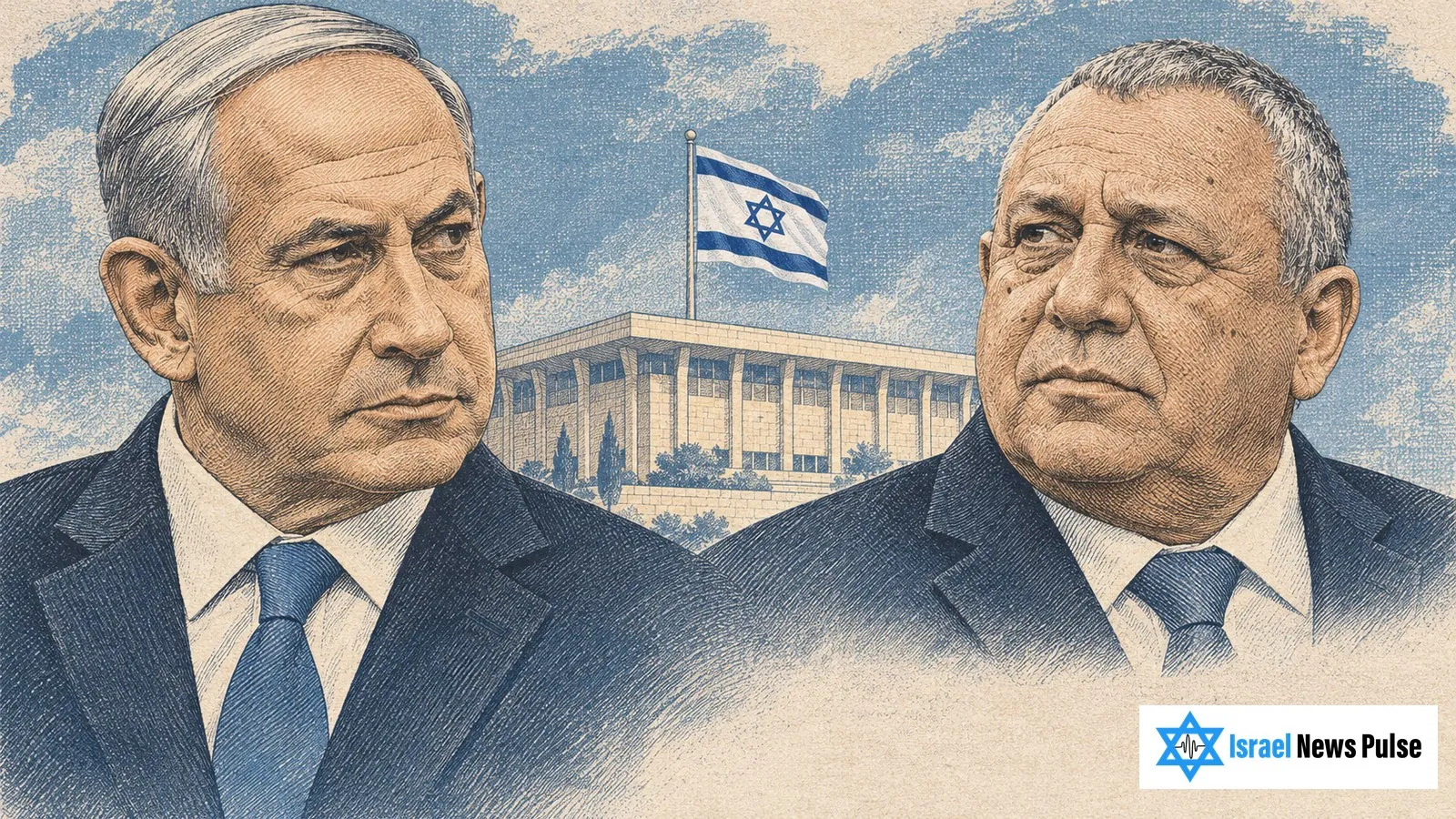
Netanyahu and Eisenkot are due to meet in Herzliya on Sunday. Bennett wants them to try for a unity government. Lapid wants Eisenkot sworn in before Likud gets a seat at the table.
Prime Minister Benjamin Netanyahu offered on Saturday to let Gadi Eisenkot serve first as prime minister in a unity government, reversing his insistence that the leader of the largest party should go first. Eisenkot agreed to meet him at 10:00 on Sunday in Herzliya. He gave Likud 24 hours to show it was ready to reach agreement on how the country would be governed.
The offer came after Eisenkot, a former Israeli military chief who leads the Yashar party, reached coalition understandings with two other parties in four days. He now has a possible route to a majority without Likud. It depends on persuading Naftali Bennett, the ultra-Orthodox United Torah Judaism party and Mansour Abbas’s Arab party Ra’am to support the same government. None of the three had announced a deal by Saturday night.
What Netanyahu Offered, and What Eisenkot Wants Answered
Likud won 27 seats in the October 27 election, six more than Yashar. Under Netanyahu’s proposal, he would begin the term as alternate prime minister and take over from Eisenkot later. He gave no date for the handover. He also made clear that he wants his ultra-Orthodox allies included and expects any agreement on military service for yeshiva students to be negotiated with them.
Eisenkot said he had already sent Netanyahu a detailed proposal through a private channel on November 22 and was still waiting for an answer. Among the issues he said remained unresolved was a state commission of inquiry into the October 7 Hamas attack. On Wednesday, the Knesset voted 65 to 50 to advance a bill establishing that inquiry. It also gave preliminary approval to an eight year limit on consecutive service as prime minister. Both bills still face further votes.
Bennett and Lapid Disagree Over When to Bring In Likud
The sharpest disagreement over Netanyahu’s offer came from two former prime ministers who ran on the same ticket. Bennett welcomed the concession and said Netanyahu now had to show he meant it. He wants a commitment to the October 7 inquiry, an eight year limit on the premiership and a military draft policy that meets the army’s needs.
Yair Lapid, Bennett’s partner in the 12 seat B’Yachad alliance, called for the opposite sequence. Eisenkot should first swear in a government without Likud, Lapid said. Only then should he negotiate with Netanyahu about expanding it. Democrats leader Yair Golan also rejected the offer. On Netanyahu’s side, Religious Zionism leader Bezalel Smotrich offered to guarantee any agreement the two men reached.
How Eisenkot Could Reach 63 Seats Without Netanyahu
Eisenkot reached his first coalition understanding on Tuesday with Avigdor Liberman’s seven seat Yisrael Beytenu. On Thursday, Yashar and Golan’s eight seat Democrats announced a deal after Golan briefly suspended talks over Eisenkot’s contacts with Likud. The Democrats said they would receive four portfolios, including responsibility for the police, and had secured a commitment to repeal the outgoing government’s judicial overhaul.
That gives the three parties 36 seats. Bennett and Lapid’s alliance would bring them to 48. United Torah Judaism’s seven seats and Ra’am’s eight would take them to 63 in the 120 seat Knesset. Even on the unity route, Likud and Yashar together hold only 48 seats. Either way, the two men meeting on Sunday need partners.
Abbas wants Ra’am inside the government. In a Channel 12 interview broadcast Saturday, he explicitly identified Hamas as a terrorist organization and pointed to an October 7 inquiry bill his party had backed that describes Hamas in those terms. He has also said he expects the separate, 11 seat Joint List to offer support from outside the coalition. Its leader, Yousef Jabareen, has pledged to help replace Netanyahu.
An outside vote and a cabinet seat carry different political costs. Channel 12 reported that Yisrael Beytenu lawmaker Sharon Sharabi told bereaved families he opposed a minority government reliant on Ra’am’s support or abstention. On Saturday he reaffirmed his support for Liberman and left open how he would vote. United Torah Judaism is divided as well. Its lawmaker Meir Porush welcomed the unity proposal, while the party has also held informal talks with Eisenkot’s bloc over military conscription. The other ultra-Orthodox party, Aryeh Deri’s Shas, has stayed publicly aligned with Netanyahu.
The December 6 Deadline
President Isaac Herzog gave Eisenkot the mandate on November 8 after factions representing 67 lawmakers recommended him, compared with 46 for Netanyahu. United Torah Judaism’s seven lawmakers recommended neither man. Those 67 recommendations gave Eisenkot the first chance to form a government.
Eisenkot’s mandate runs through December 6, and Herzog can grant up to 14 additional days. A new government takes office if more lawmakers vote for it than against it, which is why even a decision to abstain could matter. Netanyahu remains caretaker prime minister. Eisenkot has agreed to hear him out on Sunday. What he wants to take away from Herzliya is Likud’s answer to the policy proposals he sent a week ago.