The Religion of Peace Database Moves to CSPII After 25 Years
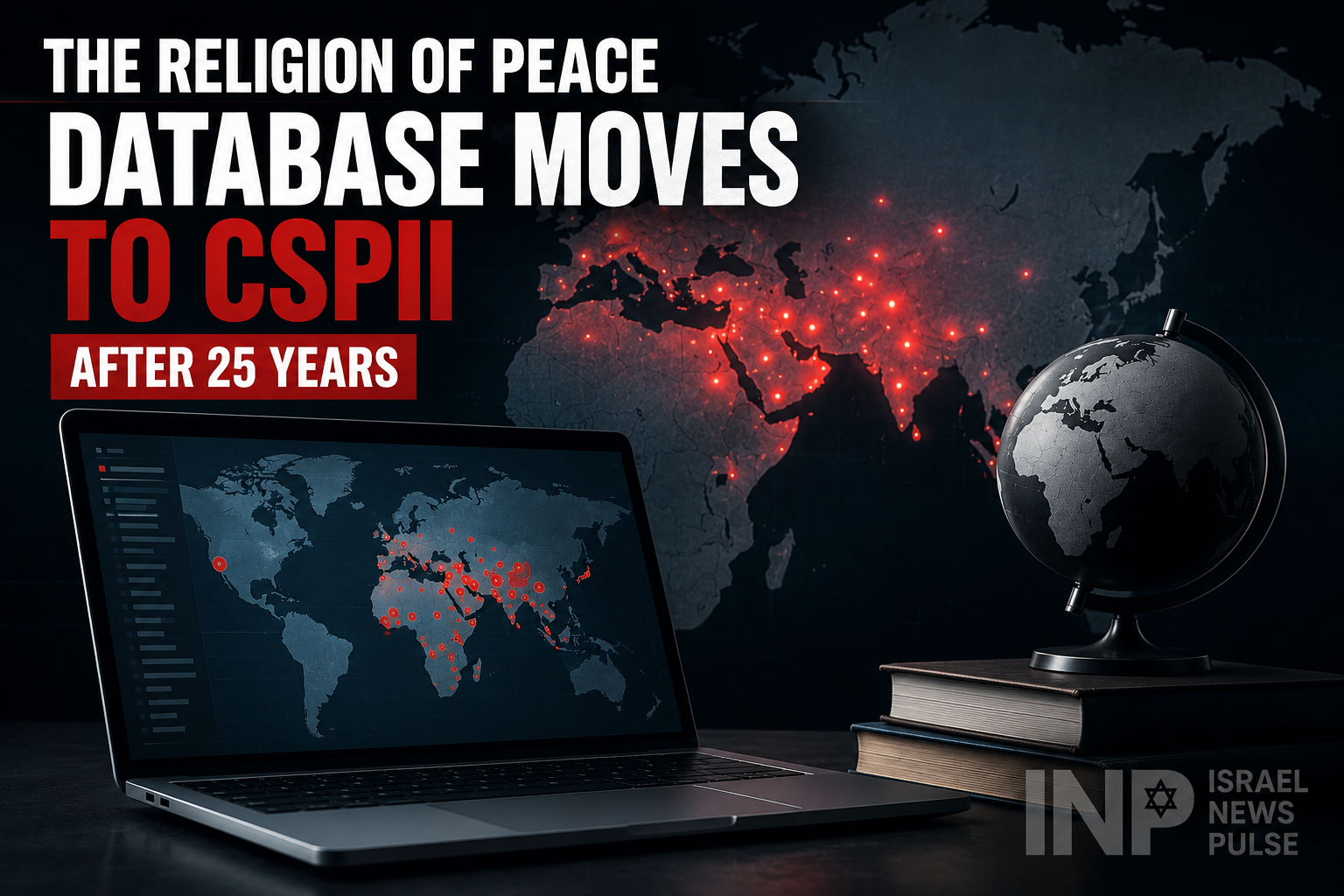
The Religion of Peace, one of the longest running open source databases tracking Islamist terrorism and developments related to political Islam, is moving to the Center for the Study of Political Islam International (CSPII) after 25 years of operation.
The website, widely known as TROP, was founded in 2001 by Glenn Roberts and has compiled thousands of reports on terrorist attacks carried out in the name of Islam, along with news, research and commentary on political Islam around the world.
CSPII announced that it has taken responsibility for the project and will continue to operate and expand its databases.
The transfer follows Roberts’ decision in 2025 to stop maintaining TROP’s regularly updated sections after approximately a quarter century of daily work.
Rather than allowing the project to become a static archive, CSPII approached Roberts with an offer to take over its ongoing operations. According to the organization, nearly a year was then spent assembling the team and developing the methodology and technical infrastructure required for the transition.
The Religion of Peace domain is scheduled to redirect visitors to CSPII’s TROP platform beginning September 8, 2026.
Website Transferred for $1
Under the agreement, CSPII acquired The Religion of Peace domain and brand, including the TROP name, along with its databases of terrorist attacks, news reports and articles.
The purchase price was a symbolic $1.
CSPII described the agreement as a transfer of responsibility and stewardship rather than a commercial sale.
Roberts retains the copyrights to his original research articles, graphics and static pages as they existed at the time of the transfer. CSPII received a permanent, royalty free license to use, adapt and publish those materials worldwide.
Roberts will also be able to maintain a separate static archive of his work at IslamIsDifferent.com.
“I began counting deadly terror attacks committed in the name of Islam to illustrate how different it is,” Roberts said. “I never expected to devote 25 years to it, but I certainly cannot devote another twenty five.”
He said he was grateful that CSPII would take over the project’s daily operations while his previous writing and research remained available to the public.
CSPII Plans to Expand TROP
CSPII says TROP’s core mission will remain unchanged, while its monitoring operation will be significantly expanded.
According to the organization, its team now reviews approximately 300 to 400 events related to political Islam around the world each day, amounting to more than 10,000 events per month.
From those reports, researchers manually select approximately 15 to 25 events each day that they consider to be of the greatest strategic significance.
The organization also plans to continue maintaining TROP’s global database of Islamist terrorist attacks. Users will be able to sort incidents by country and year and view the total number of attacks and casualties recorded.
News coverage will be divided into seven categories covering political Islam worldwide, women and children, Hijra, jihad, hostility toward non Muslims, human rights in Islamic countries and a “Critical Voices” section featuring commentary from writers and organizations outside CSPII.
The project also plans to monitor reporting from both Islamic and non Islamic sources and publish additional commentary when CSPII believes important context or perspectives are missing.
A Global Open Source Database
Over its 25 year history, TROP became particularly known for its continuously updated database documenting violent attacks attributed to Islamist perpetrators around the world.
CSPII CEO Milan Podlipny said the database had become one of the world’s most frequently cited open source collections of such incidents.
According to Podlipny, CSPII learned in the summer of 2025 that TROP was expected to become a static website and subsequently pursued an agreement to take over the project.
“Political Islam is a global problem that requires a coordinated global effort to address it,” Podlipny said.
He said CSPII intends to use the expanded project to provide information to individuals, organizations and governments confronting political Islam.
Project Manager Eyal Lior said the new system is deliberately built around human review rather than relying entirely on automated monitoring.
“Our experts review the flow of information every day,” Lior said. “Each brings a different area of expertise, allowing us to identify both major events and strategically significant reports that routine monitoring might miss.”
CSPII says its organization includes members from more than 27 nationalities and plans to expand its monitoring to additional languages and sources.
“The method remains the same: more evidence, more clarity, no shortcuts,” Lior said.
The Debate Over Political Islam
Beyond tracking terrorist attacks, CSPII analyzes Islam through a framework that distinguishes what it calls “political Islam” from other aspects of Islamic religious practice.
The organization argues that Islam’s primary texts contain political, legal, military, social and religious components, and that portions dealing with non Muslims should be understood as political doctrine.
CSPII further argues that these doctrines continue to have political consequences for both Muslim majority and non Muslim societies.
These interpretations are central to CSPII’s work but are contested. Muslims, Islamic scholars and researchers hold widely differing views on the interpretation of Islamic texts, jihad, the relationship between Islam and political authority, and whether concepts developed during early Islamic history can be directly applied to contemporary Muslim societies.
CSPII describes itself as a nonpartisan, nonprofit research and educational organization operated entirely by volunteers. Its stated mission is to research political Islam and support individuals, organizations and governments that oppose its influence.
With TROP now incorporated into CSPII, the organization will take responsibility for a database built over a quarter century while continuing to document new incidents and developments around the world.
For Roberts, the transition marks the end of 25 years of overseeing the project’s daily operations. For TROP itself, the work will continue.