How to Check Viral Videos About Israel Before Sharing Them
A real video can still carry a false date, location or explanation. Before sharing footage about Israel, trace its origin, compare the visual evidence and establish what the clip actually supports.
Start with the claim attached to the clip. "This happened today in northern Israel" contains several separate assertions: the event, the date and the place. A video may support one and leave the others unanswered. Write those assertions down before the caption begins to dictate what you think you see.
Find the Earliest Accessible Upload
Open the original post rather than relying on a screenshot. Save its URL, the account name, the displayed publication time and the exact claim. Follow any credit to an earlier uploader. A reposting account may be useful for discovery without being a witness.
Search distinctive wording from the caption and any visible watermark. If you find an older matching clip, compare the actual frames before deciding it is the same footage. Similar streets, smoke or military vehicles can appear in unrelated events.
An upload time records publication, not necessarily filming. The earliest copy you can find is a starting point, not proof that you have located the original camera operator.
Search Several Clear Frames
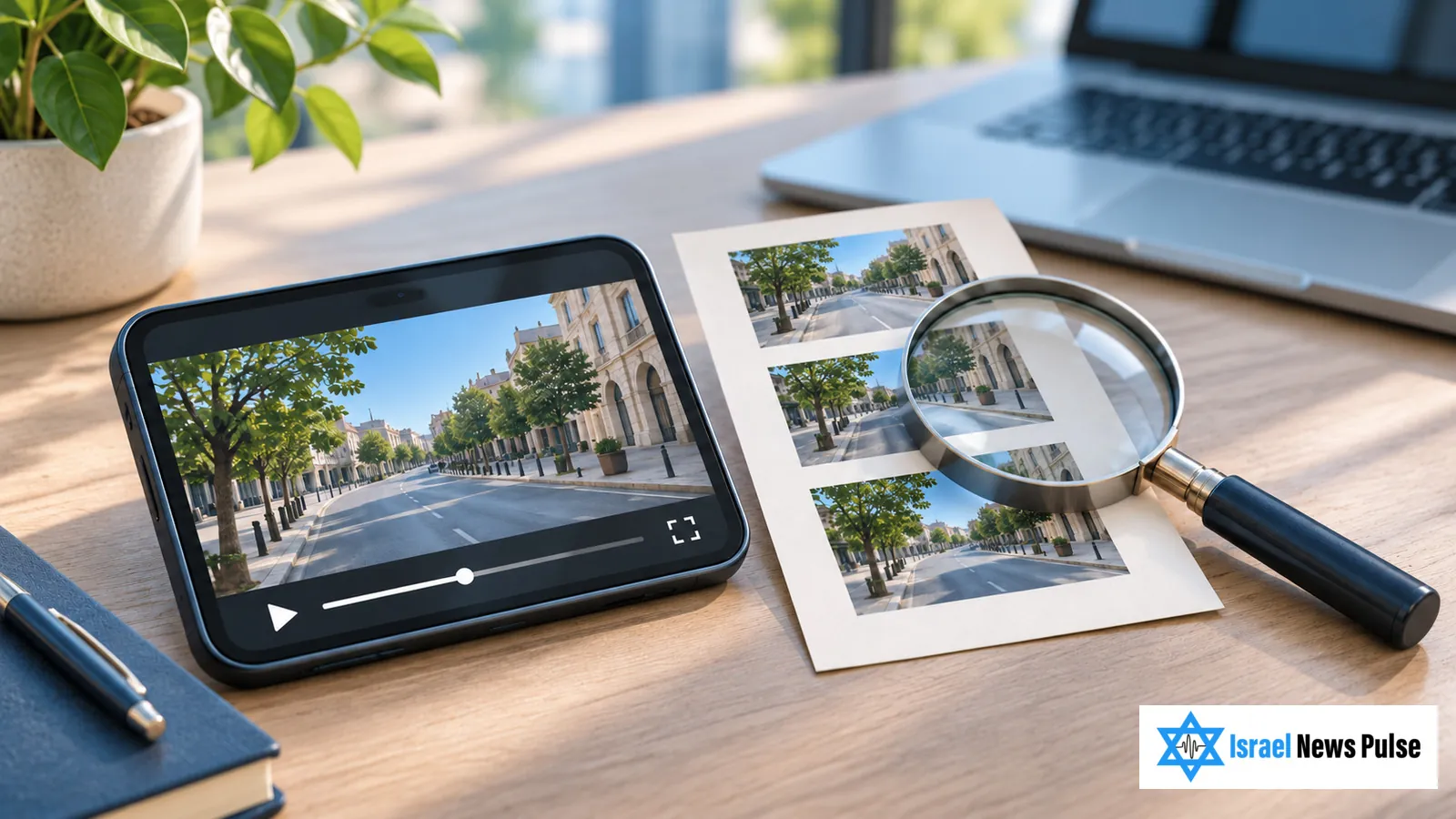
Pause the video at a recognizable building, road sign or landscape and capture a still image. Search that frame with Google Lens. Try a second and third frame if the first result is weak; a blank sky or dark flash gives a search tool little to match.
Google's own instructions allow an image upload, an image URL or a search from an image already on a web page. On a phone, open the Google app and select Lens to choose a screenshot. Crop away unrelated captions when they obscure the useful visual detail.
Open the matching pages. Google's "About this image" feature, where available, can show earlier uses and when Google first encountered similar imagery. Those dates help test a claim of freshness, but they are not the date a camera recorded the scene.
Separate the Picture From Its Story
List visible details before adopting the uploader's explanation: signage, road markings, terrain, architecture and weather. Compare several stable features against a map or known location. One familiar building style is a clue, not a location match.
Listen to the original audio and look for the longer recording. Added music, a clipped sentence or a translation pasted over the picture can change how an event is understood. If a key claim depends on speech in a language you do not understand, obtain a reliable translation before repeating it.
The distinction is concrete in INP's coverage of the Westfield Stratford video and the claim attached to it: an authentic recording does not automatically establish the accompanying account of what happened.
Check the Authority Behind the Claim
For a military announcement, look for the named military's original statement. For an arrest, seek the police announcement or court record. For an alert affecting your safety, consult current official guidance rather than a circulating video.
Several accounts repeating the same anonymous caption are not several independent witnesses. Follow their sourcing until you reach the original evidence. Treat an AI generated search summary as a pointer to sources, not as an additional confirmation.
Content Credentials can provide information about a file's origin and editing history. The C2PA standard explicitly cautions that valid provenance does not establish that content is true, while missing credentials do not prove that content is false.
Share the Supported Finding
Publish only the claim the evidence supports. If the date or location remains unresolved, keep the clip out of a breaking news update. You can preserve the source privately while checking it rather than amplifying it to an audience.
When correcting a false caption, lead with the accurate information and link to the original evidence. Avoid repeating an accusation more vividly than the correction, especially when attention itself rewards false claims about Israel.
If you already shared a mistake, correct the original post where possible and place the correction where the same readers can see it. Keep the original URL and your checking notes so the correction remains traceable.