EU Ministers Set 12 October Talks on Iran, Shipping and Gaza
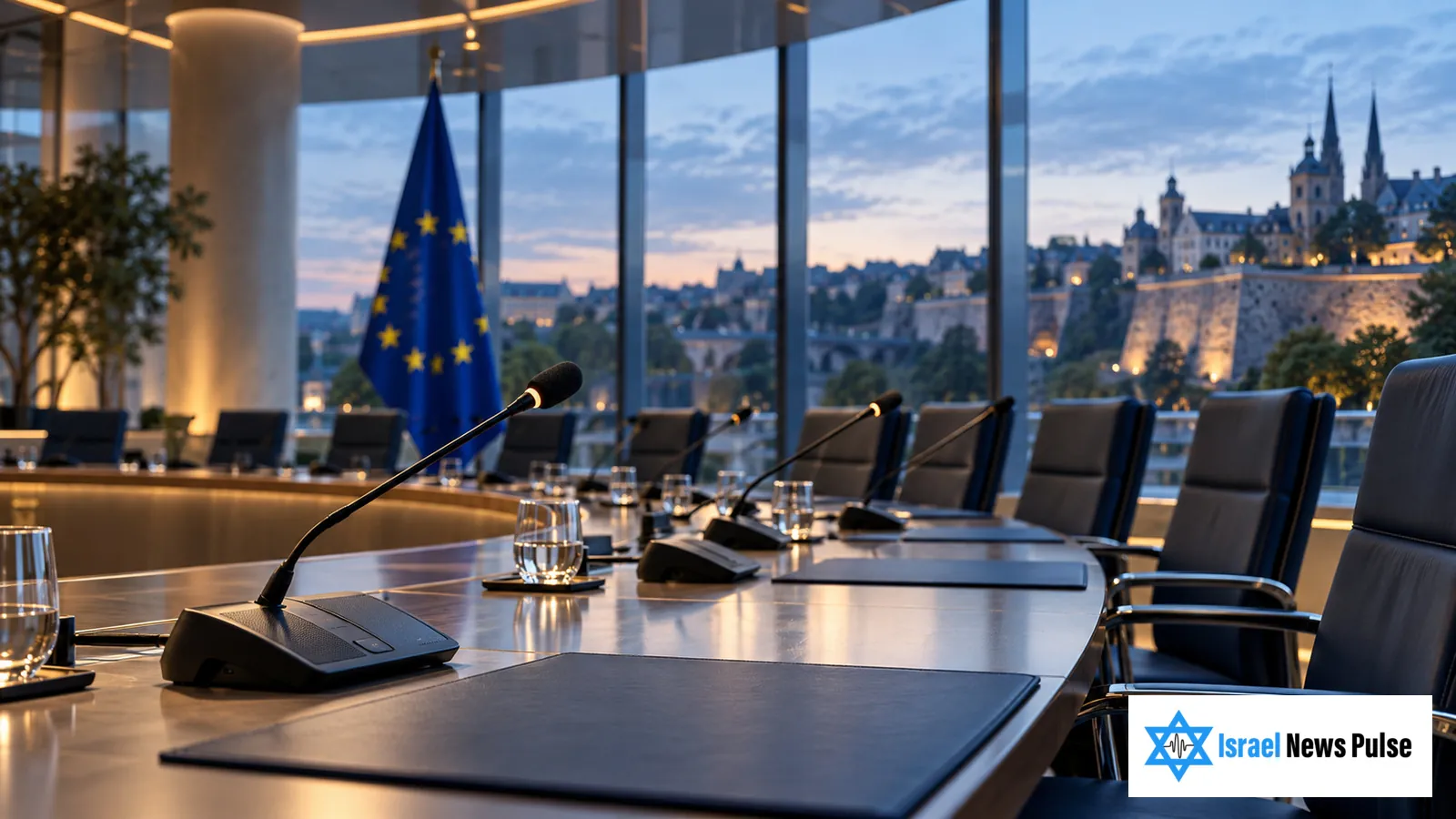
European Union foreign ministers will meet in Luxembourg on 12 October to discuss Iran, freedom of navigation and the Israeli Palestinian arena, according to the Council of the European Union. The published agenda gives Israeli readers a firm diplomatic date at a time when European positions on regional security have practical consequences.
The formal meeting notice sets the start for 10:00 local time, or 11:00 in Israel, at the European Convention Center Luxembourg. The Middle East item is listed as an exchange of views. That wording confirms a discussion, without announcing a vote, a new sanctions package or an agreement.
Iran and shipping on the agenda
The Council's meeting page says ministers will examine developments involving Iran, with particular attention to freedom of navigation, ahead of the second summit between the EU and the Gulf Cooperation Council. It also lists discussions on Gaza and Judea and Samaria in the context of the region's forthcoming electoral cycle.
The economic relationship gives these conversations weight in Israel. The European Commission identifies the EU as Israel's largest trading partner, accounting for 31.7 percent of its trade in goods in 2025. Bilateral goods trade reached €43.3 billion that year, with machinery, transport equipment and chemicals prominent in the relationship. The association agreement that entered into force in June 2000 provides the legal framework for trade and political dialogue.
For Israel, the maritime element connects the diplomatic agenda to a security issue extending beyond its own borders. The EU's published regional policy stresses the protection of navigation and safe passage through the Strait of Hormuz, a concern shared by governments and businesses dependent on reliable sea routes.
Existing positions provide the context
The European Council's published Middle East position, reflecting its June conclusions, says Iran must never acquire a nuclear weapon and calls for full cooperation with the International Atomic Energy Agency. It also opposes Iran's destabilising activities, including its ballistic missile programme.
Those positions matter alongside Europe's disagreements with Israeli policy. The same document calls for the permanent disarmament of Hamas and other armed groups, while pressing Israel on humanitarian access and its obligations under international law. It also condemns Hezbollah attacks against Israel and civilians in the country's north.
Europe also maintains a practical presence around Gaza. In a 30 September announcement, the Council described its Rafah border assistance mission as a civilian operation providing technical advice and supporting Palestinian border personnel. Its stated purpose includes building confidence between Israel's government and the Palestinian Authority. The mission has no executive authority to run the crossing.
Sanctions form part of the wider picture
According to the Council's official overview, EU measures concerning Iran cover several distinct subjects, including human rights abuses, nuclear proliferation and military support for Russia's war against Ukraine. Separate provisions also address support for armed groups in the Middle East and Red Sea region.
The Council says it broadened a sanctions framework on 22 May 2026 to address Iranian actions threatening freedom of navigation in the Strait of Hormuz. The framework connects the protection of shipping with European measures targeting Iran's regional activities.
The Council's work also involves substantial preparation before ministers arrive. Its institutional description says national permanent representatives, the Political and Security Committee and specialised working groups prepare its business. The foreign ministers implement the broader strategic guidance set by the European Council, which brings together national leaders.
A wider diplomatic agenda
The Foreign Affairs Council brings together national foreign ministers and handles the EU's external relations and responses to international crises. It is chaired by the EU's foreign policy chief, Kaja Kallas. The institution's responsibilities include sanctions, international partnerships and security policy.
The October agenda also includes Russia's war against Ukraine and the security implications of EU enlargement. Ukrainian Foreign Minister Andrii Sybiha is listed for an exchange by video. The Middle East is consequently one part of a wider diplomatic meeting, not the sole subject of a dedicated summit.
The confirmed opening is Monday, 12 October, at 11:00 Israel time. The Middle East discussion sits at the intersection of Europe's regional security policy, its economic relationship with Israel and its diplomatic engagement with Gulf partners.