Israel Defense Forces Create Drone and Robotics Battalions in Golani and Nahal
The Israel Defense Forces announced on Monday, November 9, that Golani and Nahal will each receive a specialist infantry battalion focused on detecting and striking enemy forces. Both units are being established under a decision approved by Chief of Staff Eyal Zamir.
Golani's new unit will be called Alon, with the number 11. Nahal's will be Nofekh, numbered 935. The army placed their creation within a wider effort led by the Ground Forces and the Personnel Directorate to expand the ground force structure and adapt combat manpower to changing operational demands.
Two Infantry Brigades Gain Specialist Units
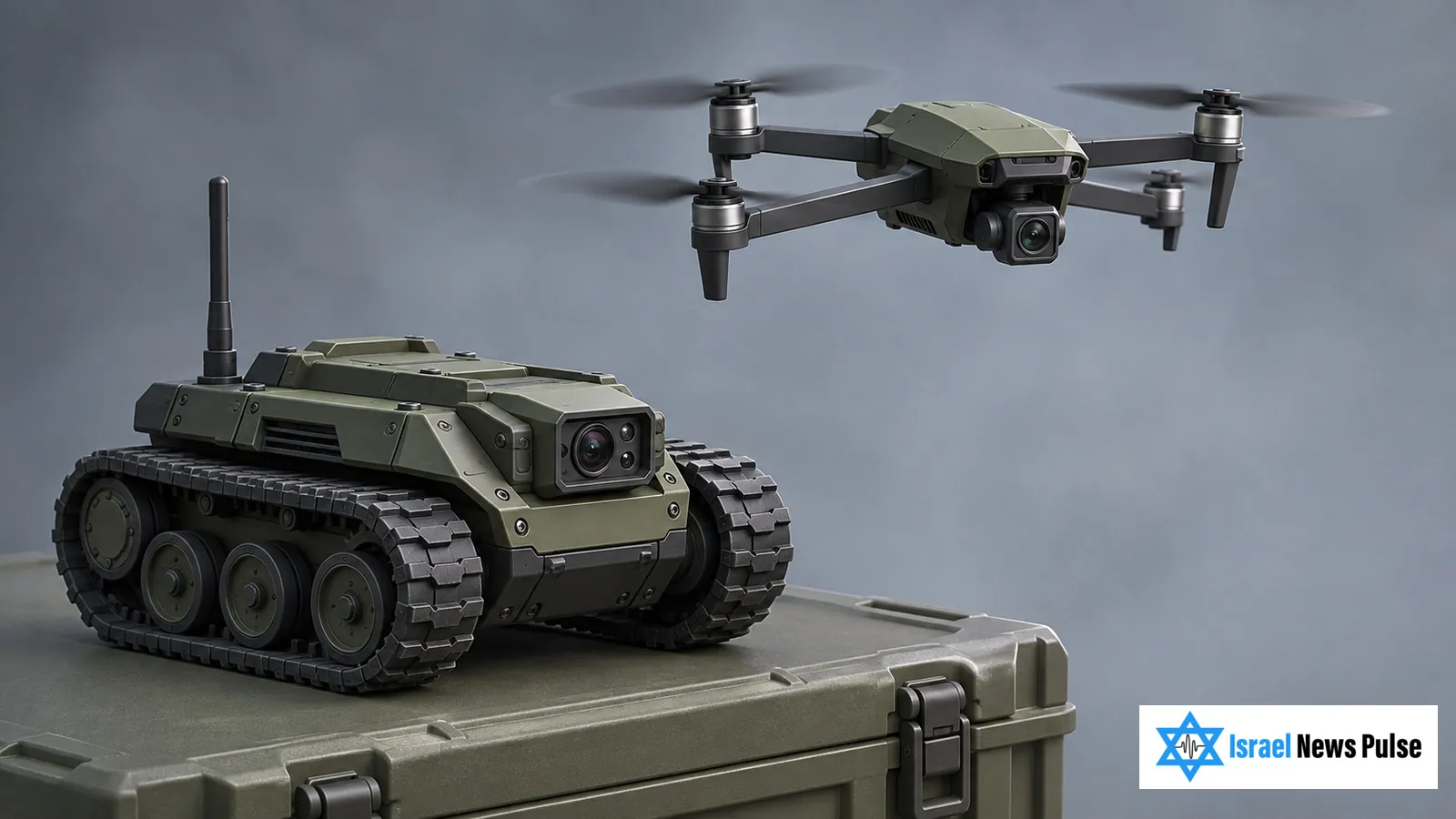
The announced specialties cover drones, robotics, observation and imaging equipment, advanced weapons and precision guided munitions. Their shared purpose is to improve the force's ability to locate an enemy and engage it on the battlefield.
The battalions are in the process of being formed. The army said the goal is to strengthen troops operating in the field and make better use of combat personnel.
For readers unfamiliar with the terminology, detection and strike brings together two connected tasks: finding a threat and directing an effective response against it. The mix of sensors, remote platforms and weapons in the announced units is intended to support both parts of that sequence.
Robots Move Into the Ground Force Structure
The decision follows Zamir's push to accelerate robotics deployment during a November 4 visit to Northern Command and the 91st Division. There, the 769th Brigade and 869th Combat Intelligence Collection Battalion demonstrated a robotic combat team model.
Zamir described robotic and technological systems operating ahead of troops and alongside them. He said the model improved operational effectiveness while strengthening protection for soldiers, and instructed commanders to speed up the integration of robotic capabilities into fighting units.
Commanders Also Face a Training Challenge
A separate military forum on November 2 brought the General Staff and brigade commanders to the new communications campus in Beersheba. The army said participants examined the use of artificial intelligence in defensive and offensive systems, information processing, analysis and operational workflows.
Zamir argued that adopting technology also requires leaders to change established habits. In the army's published account, he tied the use of artificial intelligence to preparations for simultaneous challenges on several fronts, including intelligence, decision making and action.
Human and Unmanned Forces in the Same Plan
At the November 2 forum, Zamir set out a broader concept in which manned units fight in coordination with unmanned systems. He connected the integration of artificial intelligence across military activity to the multiyear force development plan known as Hoshen.
He also cited decisions to establish a new branch for artificial intelligence and unmanned systems, alongside artificial intelligence and spectrum brigades in the Communications and Cyber Defense Directorate.