Quantum X Labs Runs Radiation Shielding Model on IBM Quantum Processor
Quantum X Labs said on November 20 that a 16 qubit algorithm had reproduced photon transport through shielding on IBM's Fez quantum processor. The experiment matched classical reference calculations, and the company now plans a direct benchmark against GPU methods.
The Israeli company has a physical model working on quantum hardware, and its next experiment is designed to show whether the approach can beat classical tools.
A Small Model of a Practical Problem
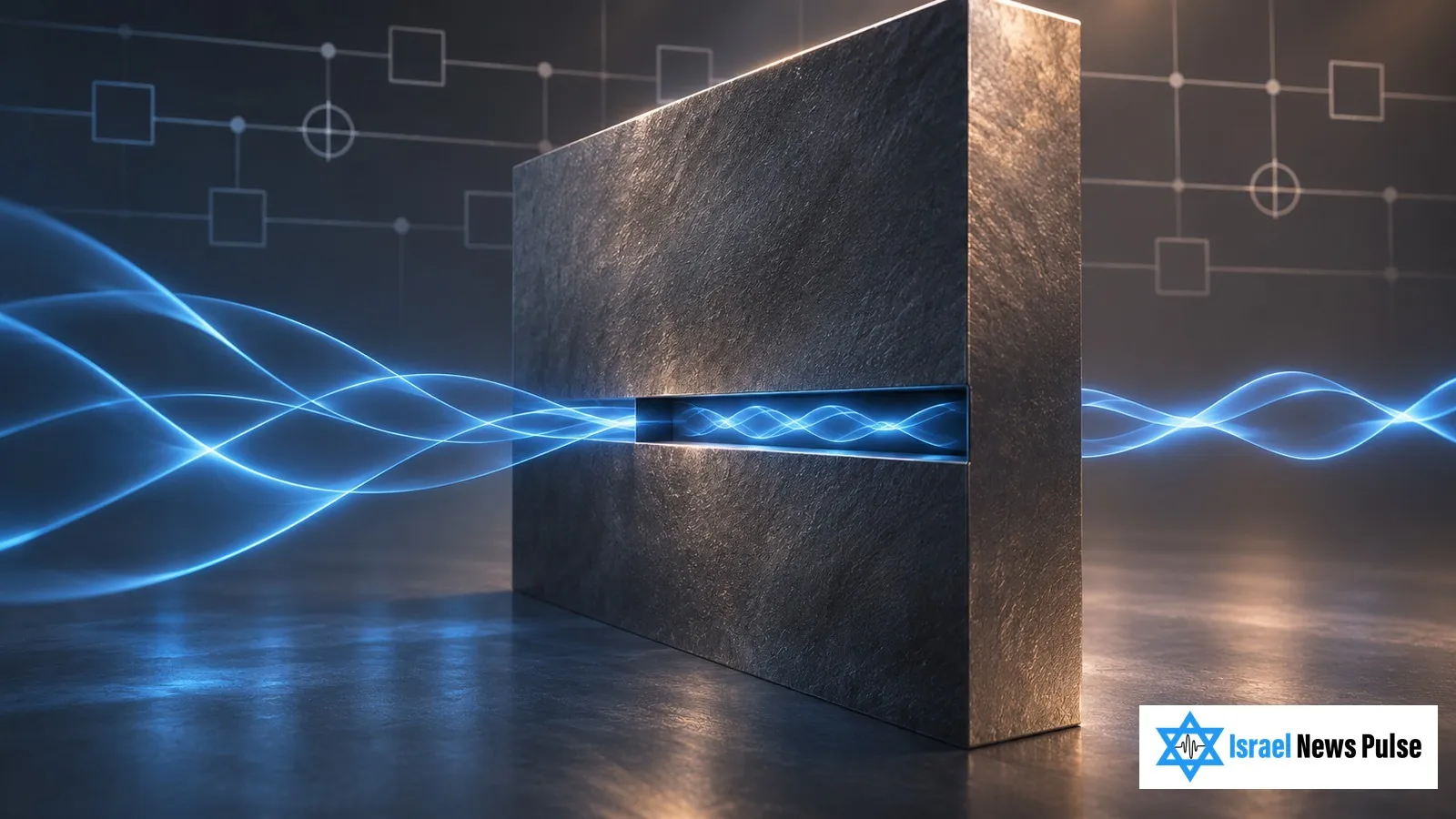
The company modeled photons with an energy of 140 keV moving through a two dimensional tungsten collimator, a structure that restricts the paths radiation can take. Its team varied shielding attenuation, the width of the channel and detector energy thresholds, then examined the resulting detection probabilities.
Radiation transport calculations matter in fields including shielding design and medical imaging. A useful calculation must describe how material and geometry affect the radiation reaching a detector.
What the Comparison Measured
According to Quantum X Labs, each measurement point used 4,096 quantum shots, or repeated executions from which outcomes are estimated. After measures to reduce hardware noise, the results showed root mean square deviations of about 0.03 to 0.04 from exact classical statevector simulations.
The company reported that the circuit reproduced changes in detection probability as the shielding and channel changed.
Readers tracing the evidence behind technical claims can use our guide to finding the original research behind an Israeli science headline.
A Different Route Than Monte Carlo
Conventional Monte Carlo calculations estimate radiation behavior by following many simulated particle histories. Quantum X Labs instead encodes transport probabilities through quantum state preparation and reversible operations.
Its head of nuclear quantum, David Shnaiderov, identified the demonstrated circuit as a foundation for quantum amplitude estimation. That technique is the proposed route to reducing the sampling effort.
What Comes Next
Quantum X Labs says it intends to make its algorithms more complex, combine the demonstrated circuit with amplitude estimation, and compare sampling requirements and computational performance against GPU accelerated Monte Carlo methods.
The company's November regulatory filing places this work within a broader Israeli technology operation that also develops quantum sensing and other quantum applications.