Pro Palestinian Marchers Chant “Yalla, Yalla, Intifada” in Brussels District With Large Jewish Community
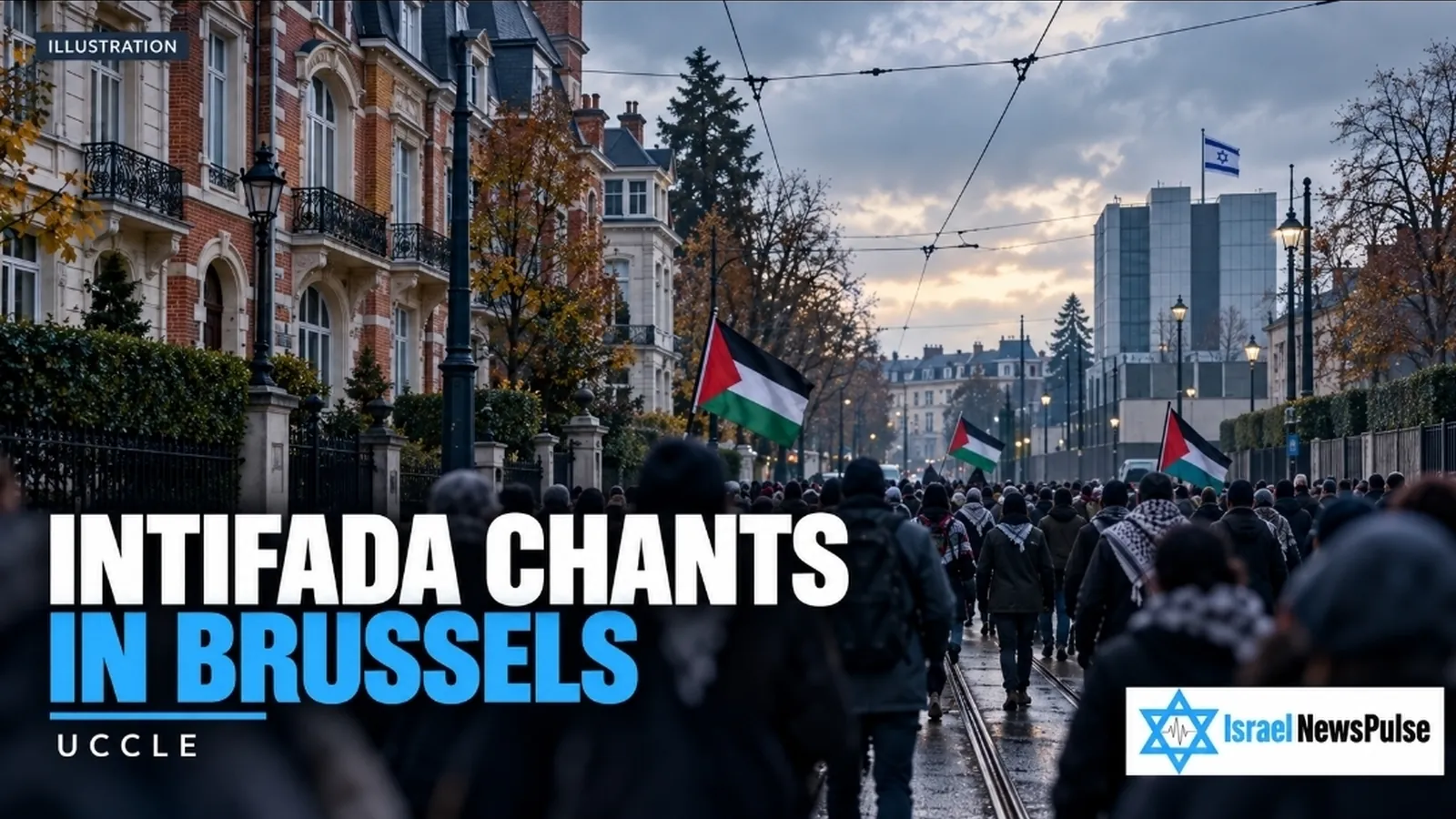
Pro Palestinian demonstrators chanting in Arabic, “Yalla, yalla, intifada,” marched through Uccle, a Brussels district home to a large Jewish community, before continuing toward the Israeli embassy.
What the demonstrators chanted
The marchers chanted in Arabic, “Yalla, yalla, intifada.” “Yalla” is an Arabic word meaning “come on,” and “intifada” means “uprising.”
The demonstrators walked through Uccle, one of the 19 municipalities of the Brussels-Capital Region.
What intifada means for Israelis
“Intifada” is Arabic for “uprising.” It is the name given to two major periods of Palestinian violence and unrest against Israel, and later to smaller waves of attacks. For many Israelis, the word is not an abstract slogan. It recalls bus bombings, shootings and stabbings, and a chant calling for an intifada is heard by many of them as a call for that violence to return.
The First Intifada, 1987 to 1993
The First Intifada began in December 1987 in the Gaza Strip and spread to the West Bank. It included riots, stone throwing, firebombs, strikes and stabbings, and Israeli soldiers and civilians were among the victims. Hamas was founded during this period. More than 150 Israelis were killed before the uprising wound down around the time of the 1993 Oslo Accords.
The Second Intifada, 2000 to 2005
The Second Intifada began in late September 2000 and lasted until about 2005. It was far deadlier for Israelis. Palestinian terrorists carried out well over 100 suicide bombings on buses and in cafes, restaurants, markets and hotels, along with shootings and other attacks. About 1,000 Israelis were killed, most of them civilians, and thousands more were wounded.
Among the deadliest attacks were the 2001 bombing outside the Dolphinarium nightclub in Tel Aviv, which killed 21 people, most of them teenagers; the 2001 bombing of the Sbarro restaurant in Jerusalem, which killed 15; and the March 2002 bombing at a Passover seder at the Park Hotel in Netanya, which killed 30.
Israel responded with Operation Defensive Shield in 2002 and began building the West Bank security barrier. Armed guards at the entrances of cafes, malls and bus stations became a routine part of daily life.
Later waves of attacks
The term has also been used for later waves of violence. From late 2015 into 2016, a wave of stabbings, car rammings and shootings, sometimes called the “knife intifada,” killed dozens of Israelis.
A district with a large Jewish community
Uccle is a Brussels district home to a large Jewish community. The demonstrators chanted the slogan as they marched through it, before continuing toward the Israeli embassy.
Belgium’s Jewish community has been the target of antisemitic violence in the past. In May 2014, a gunman killed four people at the Jewish Museum of Belgium in Brussels.
What is not known
Israel News Pulse could not independently find information about how many people took part in the march, who organized it, or whether police or local officials responded to the chanting.
Further details are likely to come from the organizers, from Brussels authorities, and from Jewish community leaders in Belgium.