Berlin Remembers October 7 Victims as 1,700 Gather at Bebelplatz
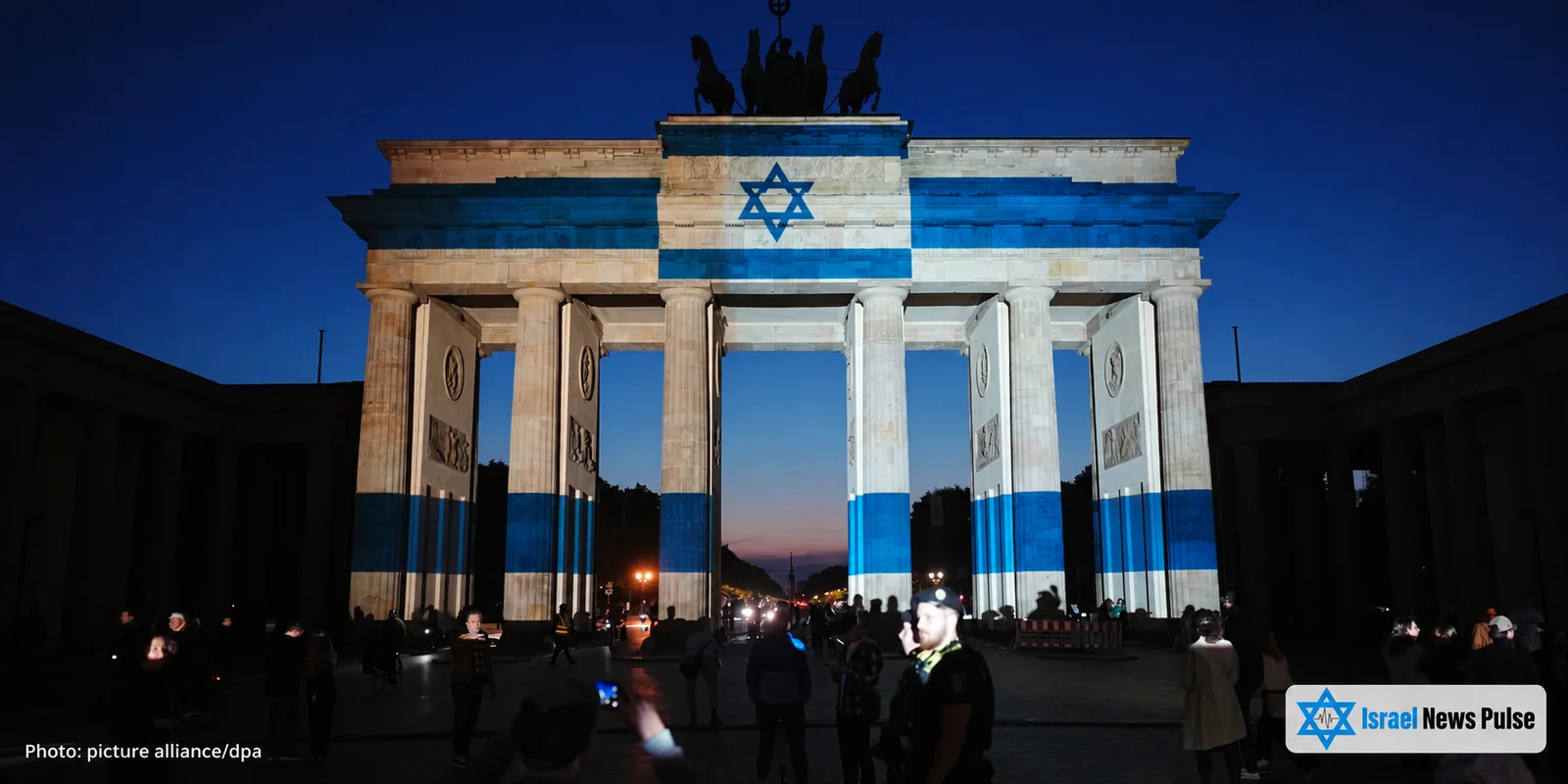
Three years after the Hamas attack, Berlin marked the anniversary with a central memorial, 500 empty chairs and an interfaith service, while German leaders called for action against antisemitism.
About 1,700 people gathered at Berlin’s Bebelplatz on October 7, 2026, to remember the victims of the Hamas-led attack on Israel three years earlier. Israeli Ambassador Ron Prosor and German Interior Minister Alexander Dobrindt joined the ceremony, where candles and speeches placed remembrance alongside the safety of Jews in Germany.
The attendance figure was a police estimate reported by Jüdische Allgemeine. Across the capital, separate commemorations took the anniversary beyond the central gathering, from an installation at the Brandenburg Gate to a religious service in western Berlin.
A warning at a place of burned books
Bebelplatz gives that message a particular historical setting. On May 10, 1933, the Nazis burned books there. Today, an underground memorial with empty bookshelves marks the destruction beneath the square.
Dobrindt told the gathering that each antisemitic attack strengthened his determination to stand up for Jews in Germany and for Israel. The ceremony’s published programme explicitly connected remembrance of the victims, hostages, survivors and their families with opposition to terrorism and antisemitism.
That connection also reached parliament. Bundestag President Julia Klöckner said Jews must be able to live freely and safely in Germany, warning against the normalization of their stigmatization by extremists.
Empty chairs and shared prayer
At the Brandenburg Gate, the German Jewish Students’ Union installed 500 empty chairs beside tables displaying photographs of October 7 victims. The installation gave absence a visible form, distinct from the speeches at Bebelplatz. That evening, Israel’s flag was projected onto the gate.
The Kaiser Wilhelm Memorial Church hosted a separate interfaith commemoration. Protestant Bishop Christian Stäblein called for a shared fight against antisemitism. The church’s announced participants included Catholic Archbishop Heiner Koch and Rabbi Andreas Nachama.
Chancellor Friedrich Merz, in his anniversary statement, reaffirmed Germany’s commitment to Israel’s security and existence as a lesson of the Shoah. He also backed a Palestinian state alongside Israel as the best route to peace and security. His remarks are covered in our report on Germany’s commitment to Israel.
A separate protest in Kreuzberg
Elsewhere that evening, several hundred people joined a pro-Palestinian demonstration against the Gaza war in Kreuzberg. Greta Thunberg attended that protest, which was separate from the memorial events.
Jüdische Allgemeine reported, citing police, that several arrests were made over prohibited symbols, including Hamas symbols. Those allegations concerned specific conduct at the protest, not everyone present. The memorials’ central message remained the one voiced at Bebelplatz and in parliament: remembering the victims also requires protecting Jewish life today.