U.S. Says Gaza Rebuilding Will Take Years, Reaffirms Goal of Ending Hamas Rule
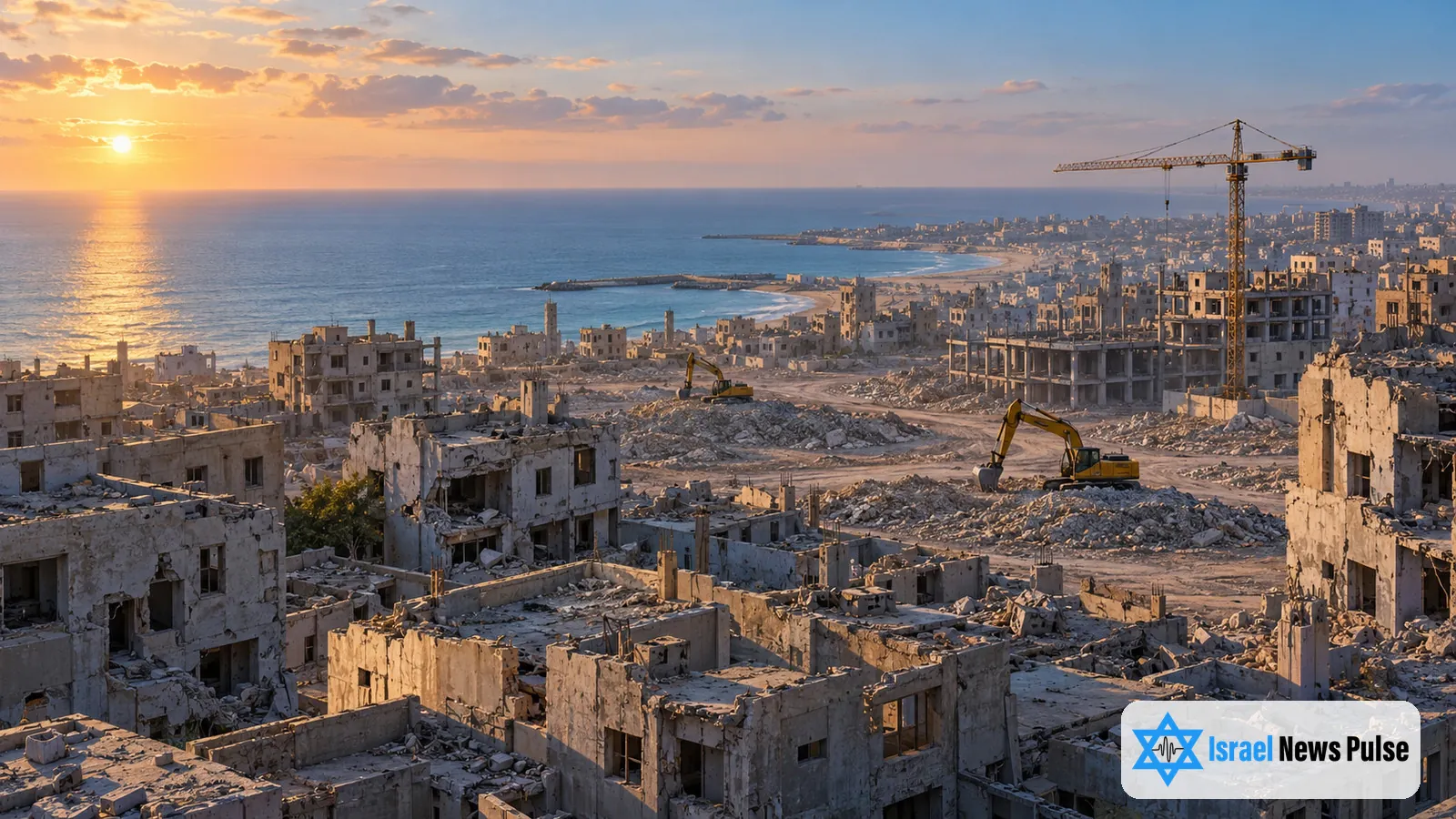
The State Department says Gaza’s reconstruction will take years and implementing President Donald Trump’s peace plan will be difficult. It reaffirmed the goal of a demilitarized Gaza and lasting security for Israel.
The anniversary refers to the summit Egypt hosted on 13 October 2025, jointly chaired by Trump and Egyptian President Abdel Fattah el-Sisi. It brought international support behind a ceasefire framework, with governance, security and reconstruction still requiring further agreements and practical work.
Washington keeps demilitarization at the center
In an anniversary statement reported by Ynet on 13 October 2026, State Department spokesman Tommy Pigott said progress was being made toward a Gaza where Palestinians could live without Hamas rule and Israel could have durable security. Ynet quoted his caution that “implementing the plan will be complex,” alongside an acknowledgment that reconstruction would take years.
That is Washington’s assessment of its policy, rather than confirmation that the territory has already been demilitarized. Hamas, the terrorist organization responsible for the October 7 attack, remains central to the unresolved question of who controls weapons and governs Gaza.
What the 2025 summit endorsed
Egypt’s presidency said the summit supported the agreement reached on 9 October 2025 through mediation by Egypt, the United States, Qatar and Turkey. The mediators’ leaders signed a supporting declaration at the summit. The agreement and the subsequent summit were separate milestones.
The initial phase produced a ceasefire beginning on 10 October 2025 and hostage and prisoner releases, Reuters reported in its 6 October 2026 review. Later elements of Trump’s plan envisaged Hamas disarmament, a Palestinian technocratic administration overseen by a Board of Peace, and a temporary International Stabilization Force.
The framework linked these security and governance arrangements to reconstruction and a phased Israeli withdrawal. Its objectives extended beyond stopping combat to creating institutions that could operate without Hamas control.
Institutions still need to become operational
Reuters reported on 6 October that Hamas disarmament, further Israeli withdrawal and large scale reconstruction remained incomplete. The planned stabilization force had not assembled, while the appointed Palestinian technocratic committee had not entered Gaza.
These distinctions are practical. Appointing a committee does not put it in charge of municipal services, and selecting a force commander does not deploy a force. The presence of new bodies on paper is therefore different from their ability to assume responsibilities on the ground.
The anniversary message sets out the U.S. destination: civilian life without Hamas rule alongside lasting Israeli security. The implementation questions concern the mechanisms for reaching it, including disarmament, effective administration and dependable funding.
A reconstruction estimate is not a funding commitment
An April 2026 assessment by the World Bank, United Nations and European Union put Gaza’s recovery and reconstruction needs at about $71.4 billion. The World Bank says the assessment covers impacts between October 2023 and October 2025 and is intended to guide recovery priorities.
Reuters reported that the Board of Peace unveiled an initial $2.45 billion rebuilding plan in September. That initial plan is much smaller than the estimated overall requirement; it should not be presented as financing for the full reconstruction effort.
A cost estimate identifies resources likely to be needed. A recovery plan sets priorities, while funding commitments and actual disbursements determine what can be financed. Keeping those measures separate explains why planning progress can coexist with a rebuilding timetable measured in years.