The South Tower Was Declared Safe on 9/11. Rick Rescorla Ordered Thousands to Evacuate Anyway.
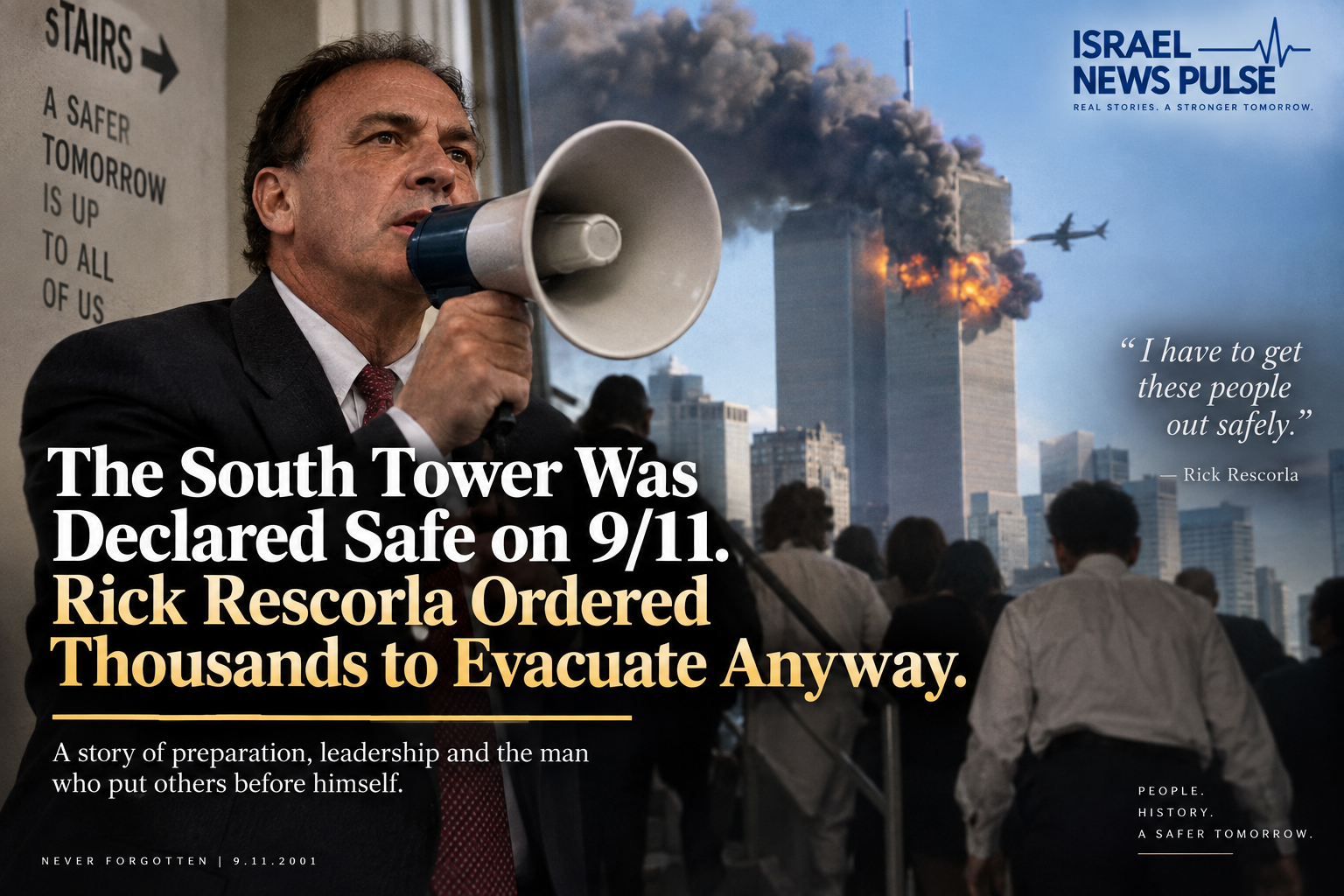
At 8:46 on the morning of September 11, 2001, Rick Rescorla was inside the South Tower of the World Trade Center when an explosion shook Manhattan.
American Airlines Flight 11 had just crashed into the North Tower.
From across the complex came fire, smoke and falling debris. Inside the South Tower, people tried to understand what they were seeing. An accident? An explosion? Something worse?
Then the public address system came on.
"Building 2 is secure. There is no need to evacuate Building 2."
People who were already leaving were told they could use the elevators and re-entry doors to return to their offices.
Some did.
Rescorla didn't.
He was Morgan Stanley Dean Witter's vice president for security, responsible for people spread across more than 20 floors of the South Tower.
And he had spent years preparing for a moment like this.
He ordered Morgan Stanley to evacuate.
At that moment, nobody inside the building knew that another hijacked passenger jet was already on its way.
They had 17 minutes.
He had seen the World Trade Center attacked before
Eight years earlier, on February 26, 1993, terrorists drove a rental van loaded with explosives into the underground parking garage beneath the World Trade Center.
The bomb exploded below the complex, killing six people and injuring more than 1,000.
The terrorists had hoped to cause catastrophic damage to the towers.
Instead, the attack revealed something else: just how difficult it could be to evacuate tens of thousands of people from two enormous skyscrapers.
Elevators stopped. Stairwells filled with smoke. Communications failed. The evacuation took hours.
Rescorla had helped get Dean Witter employees out that day.
He came away from the bombing convinced of something that would shape the rest of his life.
The World Trade Center remained a target.
Rescorla knew something about danger.
Born Cyril Richard Rescorla in Cornwall, England, in 1939, he had served as a British Army paratrooper before moving to America and joining the U.S. Army.
In Vietnam, he became a platoon leader with the 2nd Battalion, 7th Cavalry, 1st Cavalry Division and fought at Ia Drang.
He came home with a Silver Star, two Bronze Star Medals, a Purple Heart and the Vietnamese Cross of Gallantry.
Eventually, the soldier ended up in corporate America.
But he never entirely stopped thinking like one.
After the 1993 bombing, Rescorla began drilling Morgan Stanley employees for emergencies.
Again and again, they practiced getting out.
For the people trying to work, the exercises could seem excessive. Another drill. Another interruption.
To Rescorla, that was the point.
When something terrible happened, he did not want thousands of frightened people standing around waiting to decide what to do.
He wanted them to have done it before.
September 11
At 8:46 a.m., the first plane struck the North Tower.
Then came the announcement telling people in the South Tower that their building was secure.
The 9/11 Commission would later find that the announcement changed people's behavior. Some stayed where they were. Others who had started evacuating turned around and went back upstairs.
Rescorla made the opposite decision.
Morgan Stanley was leaving.
Employees began making their way toward the stairwells, following procedures they had practiced before.
What they could not see was United Airlines Flight 175.
The Boeing 767 had been hijacked after departing Boston for Los Angeles. It was now flying toward New York under the control of al-Qaeda terrorists.
At 9:03 a.m., it hit.
Flight 175 tore into the South Tower between floors 77 and 85.
Seventeen minutes had passed since the North Tower was struck.
The building that had just been declared secure was now burning too.
But Morgan Stanley was already evacuating.
The voice in the stairwell
After the impact, Rescorla kept working.
There was fear, smoke, confusion and thousands of people trying to descend through a wounded skyscraper.
Through it came a voice.
Rescorla had a bullhorn.
Survivors later remembered him singing "God Bless America" as people made their way down.
Others remembered the old Cornish songs of his childhood.
It was the same instinct he had carried with him from his military life: frightened people needed direction. They needed something familiar. They needed to keep moving.
So he sang.
And they kept going.
The drills that employees had endured for years were not drills anymore.
There was no next exercise.
This was the reason Rescorla had made them practice.
Thousands of Morgan Stanley employees and visitors made their way toward the bottom of the tower.
The company would eventually mourn 13 colleagues killed at the World Trade Center.
The overwhelming majority got out.
Rick Rescorla was not among them.
He could have left
By the time almost all of Morgan Stanley's employees and visitors had reached the ground-floor lobby, Rescorla had done what a corporate security chief was supposed to do.
He could have gone with them.
Instead, he turned around.
There might still be people upstairs.
Rescorla went back with his deputy, Wesley Mercer, and security staff members Godwin Forde and Jorge Velazquez.
They began checking the offices again.
According to an account later published by the U.S. Army, a coworker urged Rescorla to evacuate.
He replied that he would, once he had made sure everyone else was out.
There was also a phone call with his wife, Susan.
According to accounts of the conversation, she was crying.
"Stop crying," Rescorla told her. "I have to get these people out safely."
Then he continued working.
Rescorla was last reported seen on the 10th floor of the South Tower.
He was not coming down.
He was heading up.
9:59 a.m.
The South Tower had been burning for less than an hour when it began to collapse.
Floor after floor gave way.
Within seconds, the tower disappeared into an enormous cloud of dust and debris.
It was 9:59 a.m.
Rick Rescorla was inside.
So were Wesley Mercer, Godwin Forde and Jorge Velazquez.
All four died.
Rescorla's remains were never recovered.
The story became a legend. The truth was enough.
In the years that followed, another part of the Rescorla story spread.
He had predicted 9/11.
Some later accounts said that after the 1993 bombing, Rescorla and his longtime friend Dan Hill considered the possibility that terrorists might someday attack the World Trade Center using an aircraft.
Over time, that became a much cleaner story: Rick Rescorla had predicted terrorists would fly a plane into the towers.
The historical record is not nearly that simple.
There is strong evidence that Rescorla believed the World Trade Center remained a terrorist target. There are later accounts connecting him and Hill to fears about an aerial attack. But the strongest official records do not establish a surviving contemporaneous document in which Rescorla clearly predicts the attack that would occur on September 11.
He didn't need to.
Because the remarkable thing about Rick Rescorla was not that he knew exactly what was coming.
It was that he knew he didn't.
So he prepared people anyway.
For years, he made them practice.
Then one morning a plane hit the tower next door.
An official voice told them their own building was safe.
Rescorla looked at what was happening and decided they were leaving.
Seventeen minutes later, the second plane hit.
Thousands got out.
Rick Rescorla could have been one of them.
Instead, he turned around and walked back upstairs.