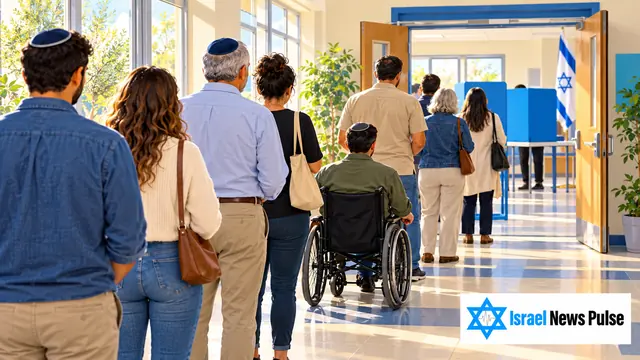
IDF Soldiers Begin Voting Ahead of October 27 Election

Israeli soldiers began voting on Wednesday, October 21, ahead of the national election on October 27, with around 850 military polling stations deployed to serve personnel at bases, outposts and operational positions.
The IDF said roughly a quarter of the stations are mobile. The network is intended to reach regular service personnel and active duty reservists, including troops deployed in Gaza, Lebanon and Syria. Voting is to continue until polls close on election day, subject to operational requirements.
The early opening gives deployed soldiers a way to participate while remaining on duty. Their ballots enter the national election through a separate collection and checking process, with counting handled by the civilian Central Elections Committee.
Mobile stations reach deployed troops
The military’s announced coverage extends from Mount Hermon to Eilat, alongside positions beyond Israel’s borders. Mobile stations form part of that arrangement, allowing voting facilities to reach personnel whose assignments keep them away from their registered civilian polling place.
The approximate station total describes the network expected to operate during the voting period. It does not indicate how many soldiers have voted, and the announcement supplied no turnout figure.
Col. Vered Ben Yehuda, the IDF’s elections officer, said the military’s task was to enable service members to cast a secret ballot during operational activity, including combat beyond the border. Her remarks presented the arrangements as a means of maintaining electoral participation alongside military duties.
Two envelopes, one vote
Soldiers can vote at the civilian station assigned to their registered address or at a military station, provided they vote only once, Ynet reported.
At a military station, the party slip goes inside a blue envelope behind the voting screen. That envelope is placed inside a white outer envelope carrying the service member’s identifying details.
The two layers serve different purposes. The outer envelope allows the voter’s eligibility to be checked and duplicate voting to be prevented. The inner envelope keeps the political choice separate from the identifying information during the count.
This is an administrative check on the voter, rather than a requirement to put a name on the party ballot itself.
The count moves to the Knesset
Ynet reported that the locked military ballot boxes are transferred under designated election officers’ supervision to the Central Elections Committee at the Knesset in Jerusalem.
Opening the boxes and counting the votes are the committee’s responsibility, without IDF involvement, according to the report. The military facilitates voting and the transfer of sealed boxes; the election authorities conduct the count.
For readers following the broader process, our guide explains how Israel’s Knesset election works, from the ballot to seats and government formation. The next nationwide voting date is October 27; the military voting period is already under way.