Weizmann Institute of Science Highlights Roy Bar-Ziv's Nanoscience Prize
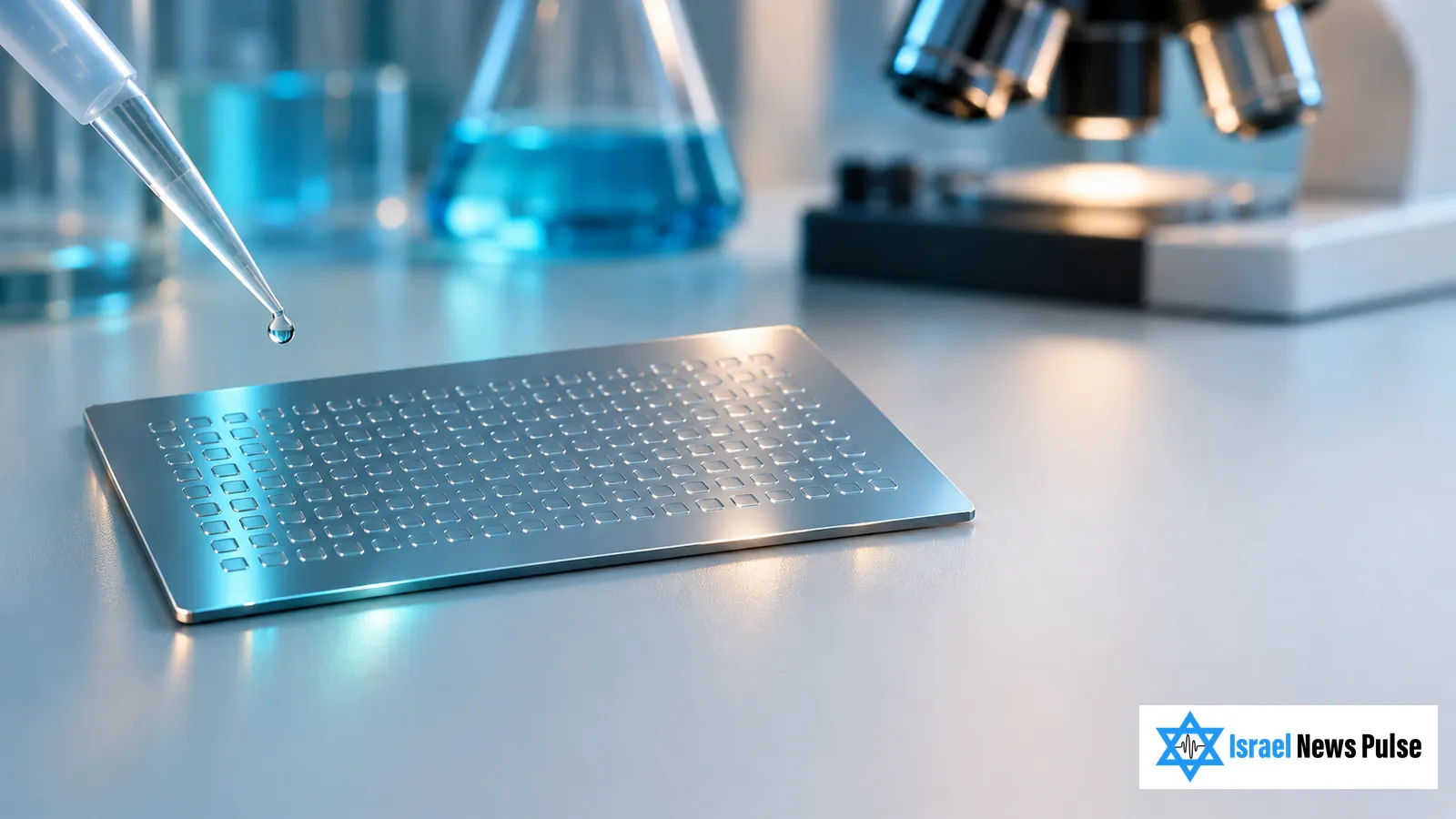
The institute used a November 8 post on X to spotlight its researcher's Tenne Family Prize. Bar-Ziv studies how to recreate biological processes in miniature compartments on silicon.
The award appears in the Weizmann Institute of Science's official register with a November 1 date. Named in memory of Lea Tenne and administered by the Israel Chemical Society, it recognizes work in nanoscale science, a field that connects physics, chemistry and biology.
This post from X is shown after you allow embedded content.
Watch the video on XPosted 8 November 2026Why Tiny Compartments Matter
Bar-Ziv works in Weizmann's Department of Chemical and Biological Physics. His laboratory studies how the machinery of life behaves when researchers assemble selected components outside a living cell.
One approach places DNA inside tiny chambers manufactured on a silicon chip. The DNA carries instructions for making proteins. A mixture containing the necessary biological ingredients allows those instructions to be read and the proteins produced directly inside the chambers.
The laboratory describes these compartments as artificial cells. By controlling their layout and the movement of materials, researchers can investigate how genetic circuits behave, how neighboring compartments influence one another and how coordinated activity develops across a larger system.
A Prize Across Scientific Borders
The Israel Chemical Society's published rules describe the Tenne prize as an annual award intended to encourage excellence among researchers whose main scientific activity takes place in Israel. The rules explicitly recognize the interdisciplinary character of nanoscience.
Nominations are submitted through department heads, supported by a description of the candidate's contributions, publications and recommendation letters. A professional committee selects the recipient. The rules also provide for the winner to be invited to lecture about the research at a conference.
Weizmann's faculty profile lists the Tenne honor among Bar-Ziv's 2026 awards, alongside the Helen and Martin Kimmel Award for Innovative Investigation.
One Chip, Many Viral Targets
A practical application of the laboratory's approach appeared in Nature Nanotechnology in December 2025. Bar-Ziv's team and collaborators developed a biochip that produces viral proteins and measures how antibodies bind to them.
In the study, the researchers simultaneously produced more than 30 targets from the coronavirus on one chip. They also tested antibodies in a total of one microliter of human serum, a very small sample, and found patterns of recognition that varied between people.
That gives scientists a way to ask two questions together: which parts of a virus an antibody recognizes, and how strongly it attaches to them. Because the proteins are made on the chip, they can be studied without separately producing and purifying each one beforehand.
The researchers also recreated binding between part of the coronavirus spike protein and the human ACE2 receptor, which the virus uses to enter cells.
Rebuilding the Cell's Machinery
Another strand of the research examines ribosomes, the molecular machinery that assembles proteins. Recreating their components helps researchers investigate how complex biological structures form from simpler ingredients.
Weizmann says Bar-Ziv's laboratory is working toward systems that can regenerate their own protein production machinery. It is also studying the use of electric fields to control gene expression on chips.
A paper published online in the Journal of the American Chemical Society on October 15 examined early and later stages in the assembly of a large ribosomal subunit in a minimal experimental system. Its authors include researchers affiliated with Weizmann, the Technion and Japan's RIKEN research center.