France’s School Protests Turn Violent as Hundreds of Lycées Face Closures
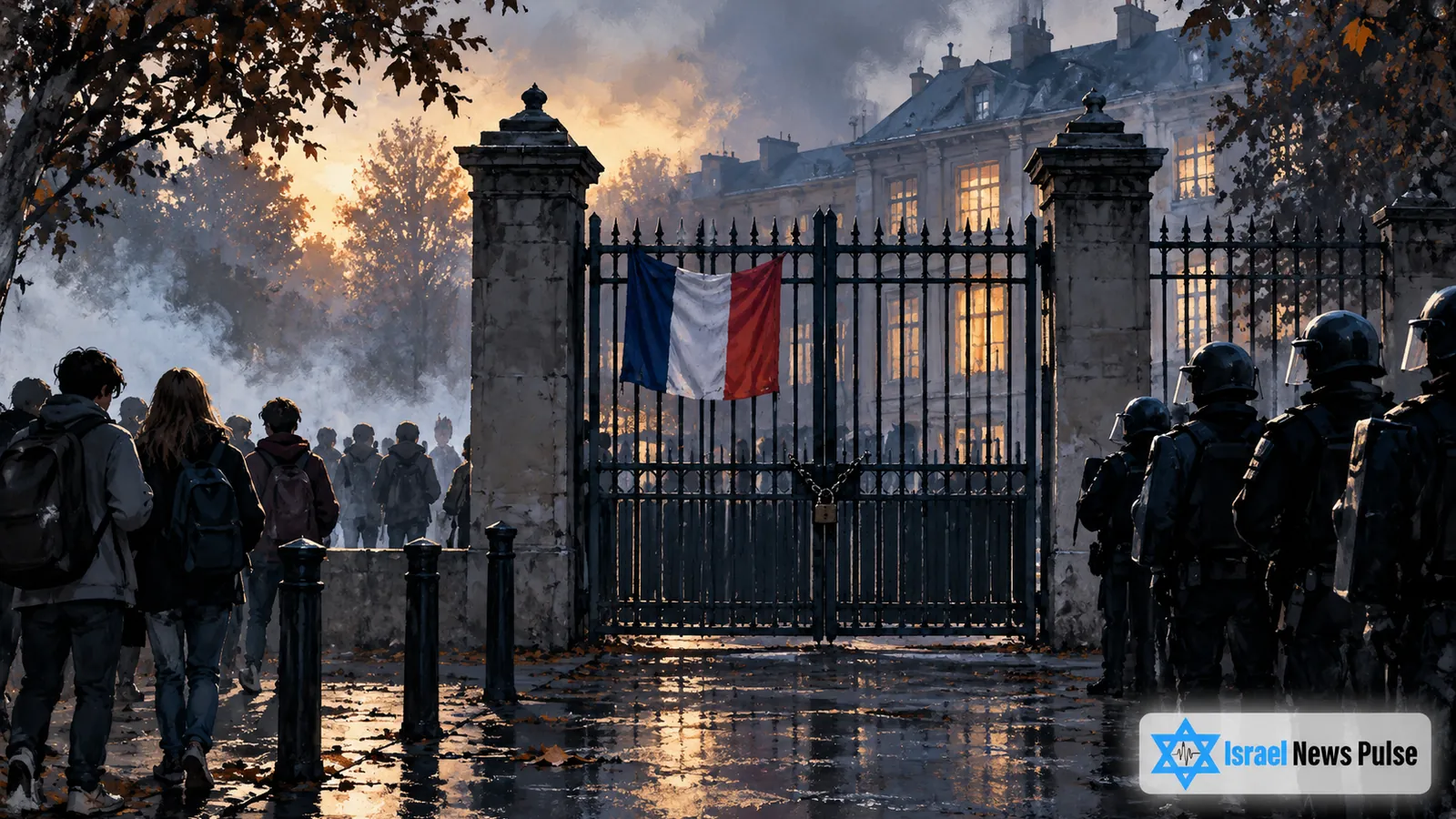
France entered Monday, October 5, facing another disrupted school day after protests over classroom conditions spread into a national confrontation over education and public order. Education Minister Édouard Geffray said on Sunday that between 400 and 500 high schools were expected to remain fully or partly closed because safe conditions for lessons had not been restored.
The scale of the disruption is substantial, but the different figures describe different things. Geffray reported 24 schools burned or vandalised and 78 education staff injured since the movement began. Around 5,000 people, mostly teenagers, had been arrested during the preceding week, according to reporting citing French authorities. Those arrests are not convictions, and the closure estimate does not mean hundreds of schools were destroyed.
How a dispute over school conditions spread
The movement emerged in the Paris region in September before spreading across France. Students describe missing teachers, overcrowded classrooms, deteriorating buildings and timetables that leave them struggling to keep up. Their demands concern the daily workings of public education, even as violence around some demonstrations has increasingly dominated the headlines.
School blockades and street protests have brought together different participants. Student representatives have distanced themselves from the violence while maintaining their demands for additional resources. Treating every participant as a rioter would obscure that distinction, just as describing the entire episode as peaceful protest would leave out the attacks and destruction.
Attacks and serious injuries intensify the crisis
Among the incidents reported by Euronews was an assault in La Ciotat in which a 59-year-old teacher was beaten and sprayed with petrol. A 16-year-old suspect was arrested in Marseille on Sunday. In Belfort, a police officer was pursued and beaten by a group of young people; two people were taken into custody in connection with the attack.
Students have also suffered serious injuries. In Tours, prosecutors said a young man lost sight in his right eye following clashes with police. His family filed a complaint alleging violence by a person exercising public authority.
On Monday, Reuters reported that a 15-year-old in Lens had lost a hand, citing local prefect François-Xavier Lauch, who said an investigation had opened. The agency attributed the account that the teenager had picked up a police stun grenade to local newspaper La Voix du Nord, not to the prefect. That reported mechanism should not be confused with an established investigative finding.
A political battle over responsibility
The government has accused far left activists of exploiting the movement. Reuters reported on October 1 that a person close to Prime Minister Sébastien Lecornu supplied an account of a crisis meeting attributing the movement’s origins to La France Insoumise and allied groups.
LFI rejected the accusation. Its lawmaker Louis Boyard said the party supported non-violent demonstrations and accused the government of aggravating tensions. The allegation of political orchestration remains an attributed claim, not a settled explanation for the actions of thousands of students.
Interior Minister Laurent Nuñez has defended police intervention against violence. Student and teacher organisations, meanwhile, have criticised police tactics. Specific allegations about assaults and excessive force require investigation on their own evidence.
What the government is proposing
Lecornu has asked ministers to turn students’ complaints into a programme of responses, with initial decisions, costs, funding and timetables due by the end of October, according to Reuters. He also wants to accelerate consideration of legislation intended to make perpetrators bear the cost of property damage.
The education minister’s position combines recognition of legitimate school grievances with rejection of violence and an insistence that pupils retain access to lessons. In an RTL interview on September 30, he argued that concerns such as absent teachers and problems with facilities should be addressed through organised local channels.
Student representatives left Friday’s talks dissatisfied and called for further demonstrations on Tuesday, October 6, with union support. France therefore faces two immediate tasks: restoring safe access to schools and producing a credible response to the conditions that brought students onto the streets. Success on either front will be difficult if the other is ignored.