Macron Links Fuel Prices to Iran War. But What About France’s High Schoolers?
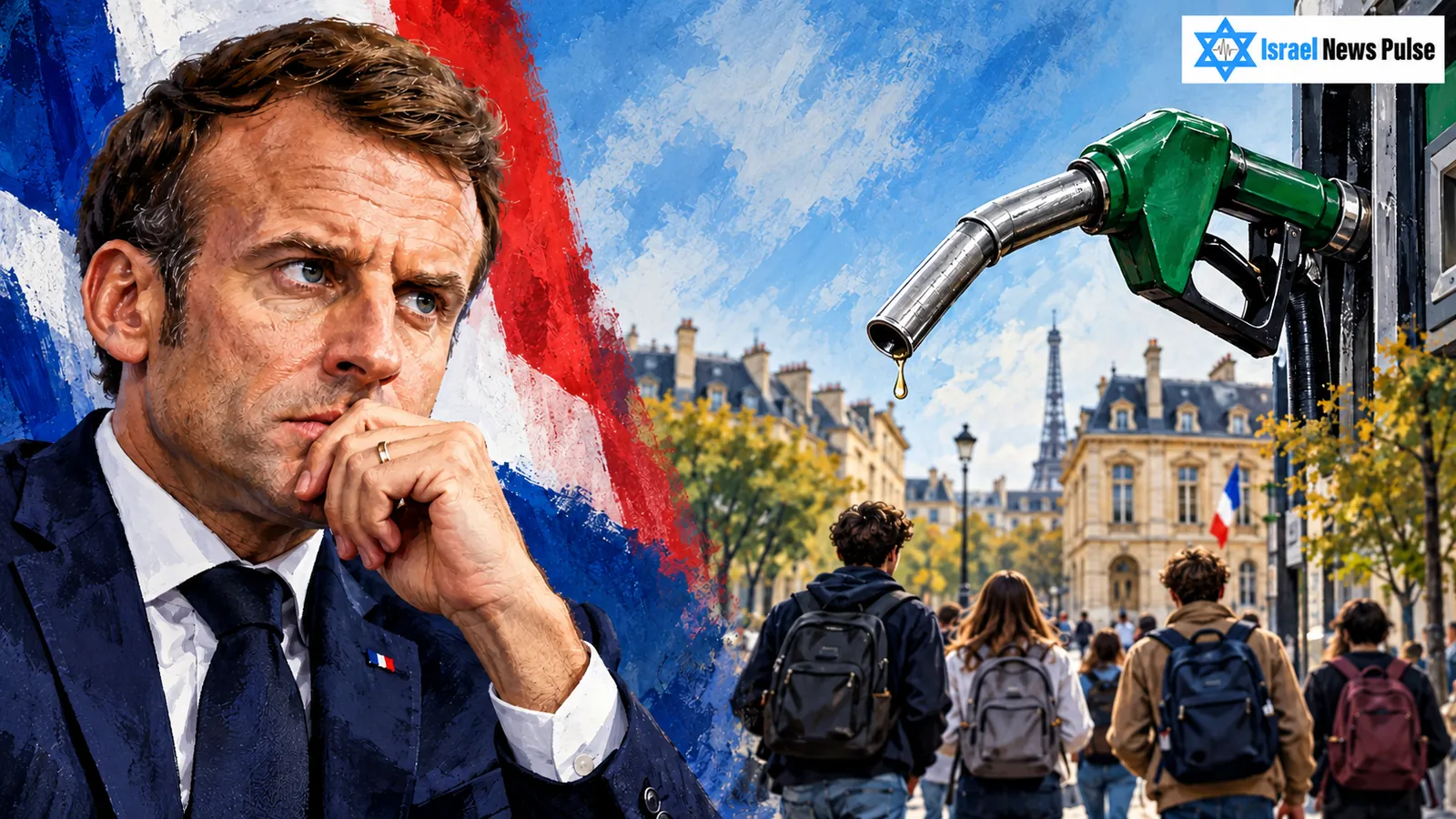
Emmanuel Macron linked rising fuel prices to the Iran conflict while condemning looting and attacks on public buildings after unrest in France. For a crisis associated with high school protests, that raises the question Israel News Pulse put to its readers: “Quick question though - since when do high schoolers care about fuel prices?”
It is a fair question, and the president’s answer does not settle it. Pupils do not usually pay for petrol, yet the explanation offered from the Élysée reaches for a war abroad to account for scenes at home.
This post from X is shown after you allow embedded content.
Watch the video on XPosted 18 October 2026An explanation that arrives too conveniently
Fuel costs are a real pressure on French households, and the Iran conflict does affect energy markets. But a cost of living argument sits oddly on top of a crisis that, in the president’s own telling, involved looting and attacks on public buildings. Neither of those is a reaction to the price at the pump.
Reports from the weekend describe tear gas, burning buildings and about 1,800 arrests across France, with protests associated with high school students in the background. When that is the picture, pointing to a foreign war invites the suspicion that the real subject is being avoided.
The choice of words matters too. By tying the unrest to events far from France, the address moves attention away from what happens inside French schools and neighborhoods, and from the question of who is responsible for the violence.
Why the high schoolers are the point
The question works because it is simple. Teenagers worry about exams, teachers and their own future, and some may follow a family’s bills. Few would place fuel prices at the center of a decision to join a street protest, and fewer still to set fire to anything.
Reports also describe a wider coalition, including student organizations, a trade union and Yellow Vest activists, and place education alongside living costs. That mix is exactly why a single line about petrol cannot account for it. Students were demanding things connected to school, and the fuel explanation answers a complaint they were not mainly making.
Pointing this out is not a claim about every teenager or every protester. It is a claim about the argument: an economic explanation stretched to cover a crisis it does not fit.
Responsibility for the violence
Peaceful protesters and people suspected of looting are different groups, and the law treats them differently. But a government that wants to stop the destruction has to name it plainly and address it directly, rather than folding it into a story about energy markets.
The Israel News Pulse post puts that gap on display. A president discussing an overseas war, and a domestic crisis associated with schoolchildren, are two things that do not obviously connect.
What a real answer needs
A real answer would say which grievances belong to which participants, what the government can change inside schools, and who answers for the violence. It would also say whether the Iran conflict has anything to do with what happened on French streets or is simply a convenient backdrop.
Until the address does that, the original question stands. Since when do high schoolers care about fuel prices, and what is the government not saying?