Netanyahu Allies Promote Eisenkot Partnership as Rotation Idea Circulates
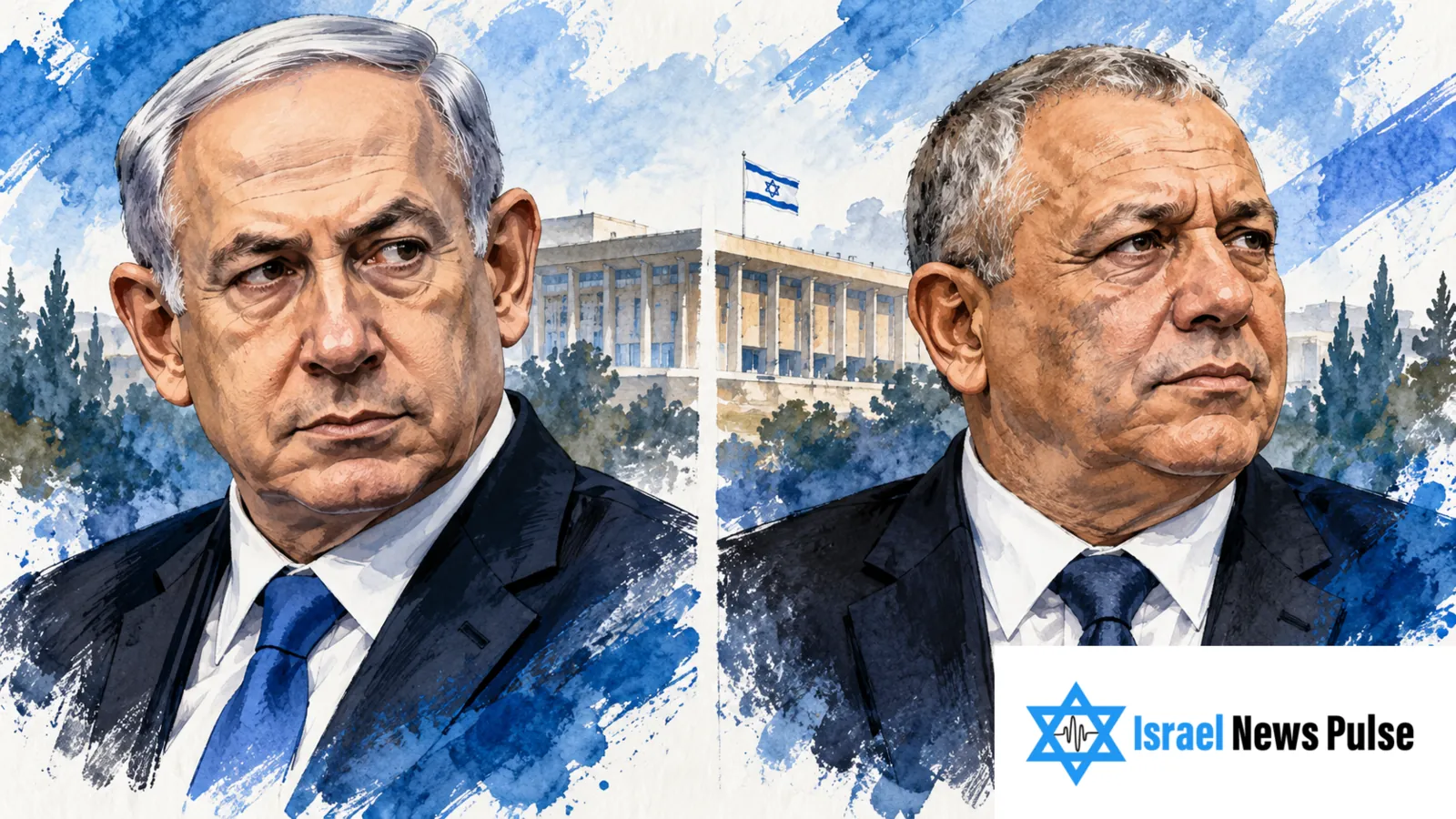
Reports describe efforts to reshape Israel's next coalition, but Eisenkot has rejected serving under Netanyahu and no agreement has been established.
Prime Minister Benjamin Netanyahu's allies are promoting a possible unity government with Gadi Eisenkot, while figures around US President Donald Trump are floating a rotating premiership, according to reports by i24NEWS and The Jerusalem Post.
The proposals face an immediate obstacle: Eisenkot, the former military chief who leads the Yashar party, has publicly ruled out serving under Netanyahu, including through a rotation deal. Neither report establishes that the two men have reached an agreement.
Netanyahu pitches a different coalition
i24NEWS, citing The Washington Post, reported that Netanyahu privately told American and European officials that a partnership with Eisenkot could allow him to govern without some of his far right allies, including National Security Minister Itamar Ben-Gvir.
The underlying Washington Post report cited three people familiar with the discussions. It described Netanyahu's camp as promoting the idea and Trump as receptive, while also reporting divisions within the US administration over whether such a partnership would work.
That possibility has already drawn resistance from inside Netanyahu's coalition. In a separate October 26 report, The Jerusalem Post said Ben-Gvir accused Likud of trying to weaken his party and prepare a unity government that would exclude him.
A rotation proposal in Washington
In an October 26 analysis, The Jerusalem Post reported that some figures in Trump's circle were considering an arrangement under which Netanyahu would remain prime minister for the first year before a successor took over.
Supporters linked that sequence to efforts to advance a normalization agreement with Saudi Arabia before Trump's term ends. They argued that a government without Ben-Gvir and Finance Minister Bezalel Smotrich would have greater room to pursue regional diplomacy.
The article did not describe an agreed timetable. It said Trump had not formally endorsed the initiative and that no substantive discussions about the proposed framework had taken place with Eisenkot or other senior opposition figures.
It also reported that US Ambassador to Israel Mike Huckabee denied an American effort to push a unity government.
Eisenkot has already rejected serving under Netanyahu
Eisenkot addressed the rotation question directly in an October 21 interview with 103FM, covered by The Jerusalem Post. He said he would not serve under Netanyahu even if the premiership were shared, and would resign if such an arrangement came about.
His position gives the discussions a clear political limit. Interest among Netanyahu's allies or American figures does not establish that the prospective Israeli partner is willing to join.
Eisenkot has served in a Netanyahu government before. He entered the emergency government formed after the October 7, 2023, Hamas attack. His current refusal makes clear that his earlier participation does not amount to a commitment to another partnership.
The previous rotation remains a central obstacle
The question of trust predates the latest reports. On August 26, The Jerusalem Post described discussions among Likud officials about a possible Netanyahu-Eisenkot rotation if neither political bloc secured a majority.
Those discussions focused on what Netanyahu could offer Eisenkot and how any eventual transfer of the premiership could be guaranteed. The newspaper characterized them as scenario planning.
The reference point was Netanyahu's 2020 agreement with Benny Gantz. That government collapsed before Gantz took his scheduled turn as prime minister.
For anyone pursuing another rotation, the practical challenge therefore extends beyond dividing cabinet posts: it would require a willing partner and an arrangement that partner believes will be honored.