Joint List Rejects Eisenkot's Four Conditions for Political Cooperation
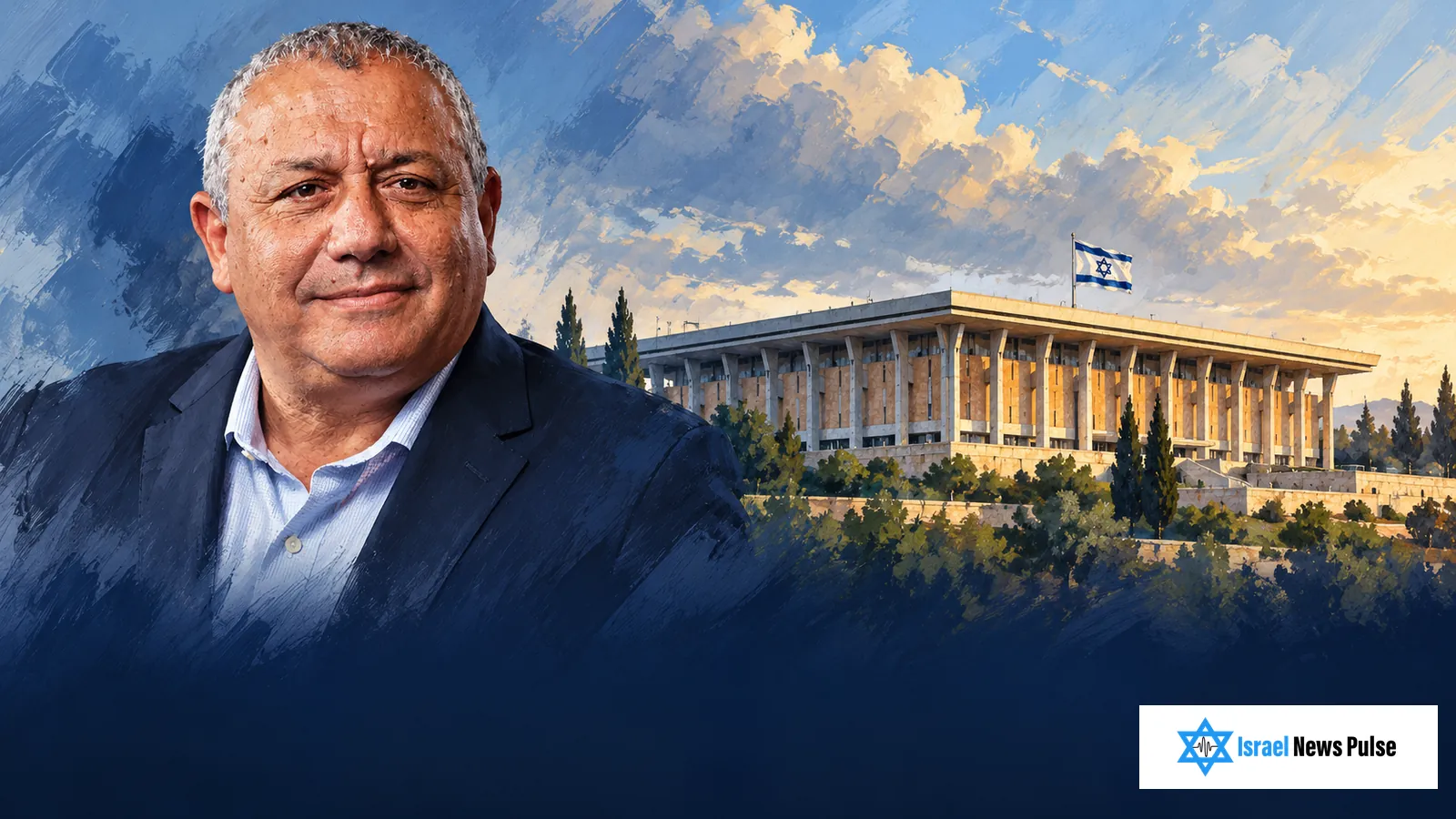
Bakr Awawdeh told Jordan's Al Mamlaka that Eisenkot must withdraw his principles if he wants a government reliant on Arab political forces. He also said no formal approach had been made.
The Joint List does not accept Gadi Eisenkot's four conditions for political cooperation, Bakr Awawdeh, No. 4 on the electoral alliance's list, said in an interview with Jordan's Al Mamlaka television channel.
Awawdeh said the Yashar leader would have to withdraw those principles if he wanted to form a government dependent on Arab political forces. He also said Eisenkot had not formally approached the alliance.
The Four Principles Eisenkot Has Set Out
Eisenkot reiterated the conditions on October 31, 2026, in a statement reported by Israeli news outlets including Davar and Ynet. They cover the character of the state, its founding values, service obligations and Hamas's military and governing power in Gaza.
The first is recognition of Israel as a Jewish, democratic and liberal state with equal rights. The second is commitment to the values of Israel's Declaration of Independence.
The third is mandatory service for all Israeli citizens, through military, national or civilian service. The formulation includes several routes to service.
The fourth is recognition of Hamas as a terrorist organization and of the obligation to destroy its military capabilities and governing power in the Gaza Strip.
Two Different Starting Points for Cooperation
The Joint List is an electoral alliance of parties drawing much of their support from Israel's Arab electorate. Yashar is the party led by Eisenkot, a former chief of staff of the Israel Defense Forces.
For Eisenkot, the four principles are the stated foundation for broadening political partnership. Ynet's account of his October 31 statement said he regarded any Knesset member willing to sign them as a possible partner in forming a new government.
The conditions also reflect themes in Yashar's published platform. The party's official website links Israel's Jewish and democratic character to the Declaration of Independence and advocates service for every citizen through suitable frameworks.
Awawdeh's starting point is different: if Eisenkot wants to rely on Arab political forces to form a government, he must retract the package.
Rejection of the Full Package
Awawdeh rejected the four principles as a package. He gave no separate answer on each condition and did not say which wording the alliance objects to.
The package he rejected includes the demand to recognize Hamas as a terrorist organization and to destroy its military capabilities and governing power in the Gaza Strip.
His stated demand remains consequential: withdrawal of the principles would remove the framework Eisenkot has publicly proposed for partnership.
Joining a Coalition Differs from Supporting It Externally
A party that joins a governing coalition takes part in an agreement over the government's program and the obligations of its partners. Such agreements can also allocate ministerial portfolios and other parliamentary or government positions.
External support is a different arrangement. A party can remain outside the governing coalition while helping a government secure parliamentary backing, including in a confidence vote, without taking cabinet seats. Support can also be limited to specified votes rather than a shared governing program.
Eisenkot has made no formal approach to the alliance. Before a possible partnership could become a governing arrangement, the parties would have to establish both the principles on which they could cooperate and the form that cooperation would take.