Why One IDF Soldier Gave Back His Weapon: “The IDF Put Us at Great Risk”
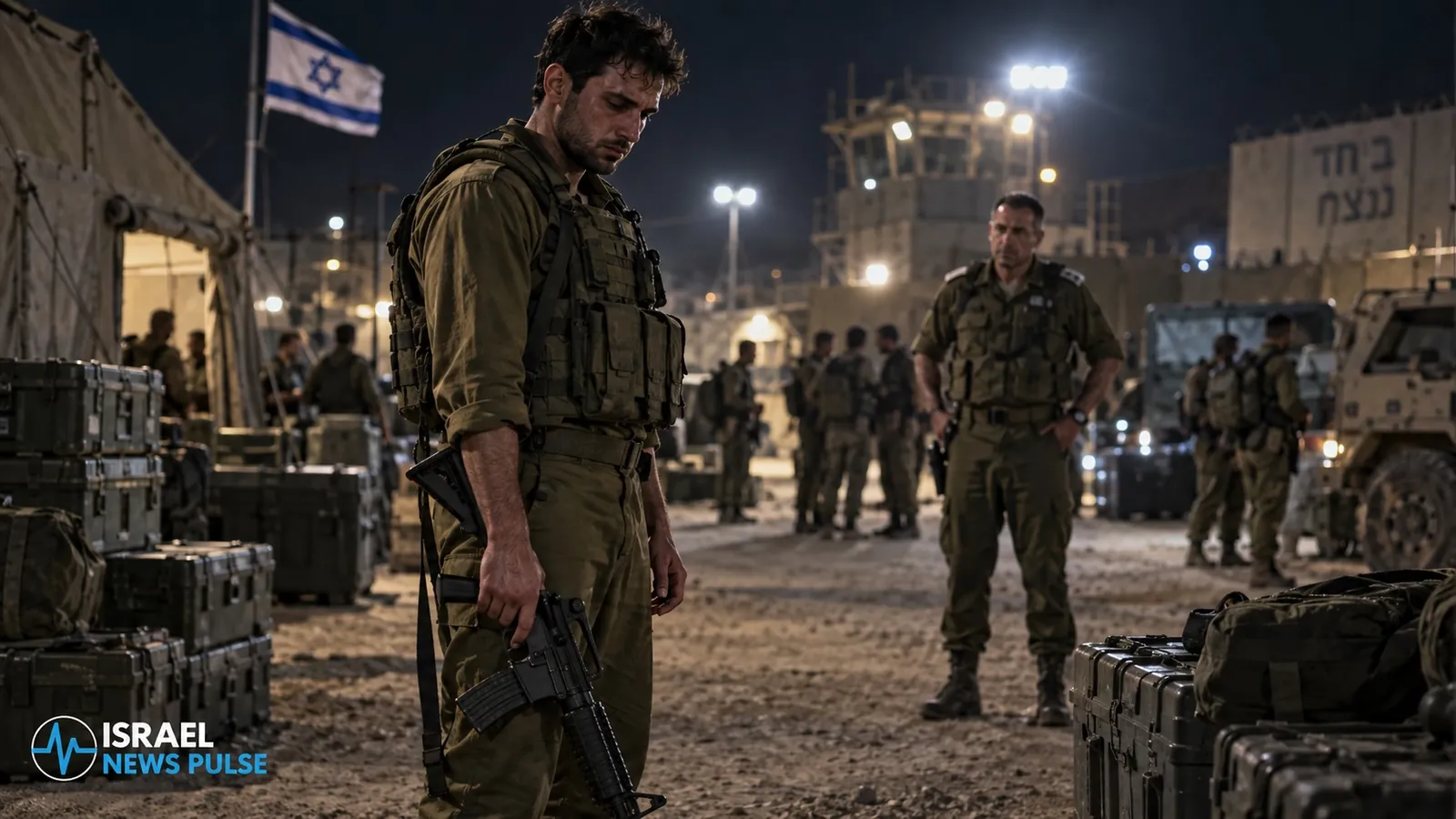
In January 2009, as Operation Cast Lead came to an end, Dani Blekman walked up to his commander and handed him his M16.
His commander refused to take it. There was a procedure for returning a military weapon: the rifle went back through the armory, papers were signed, and a reservist completed an orderly release from duty. Blekman says he had reached the point where none of that mattered to him.
“I told him that I can't be part of it anymore.”
Then he headed for his car.
What makes his story unusual is not that he walked away from military service. It is why. Blekman was not rejecting war, nor was he arguing that Israel had used too much force. After years of checkpoints, arrest operations, military prison and two wars, the former IDF infantry first sergeant had reached the opposite conclusion: Israel was asking its own soldiers to absorb risks that, in his view, should have been imposed on the enemy.
“The IDF put us at great risk due to their fear of civilian collateral damage,” he told Israel News Pulse.
Today, Blekman is 41 and lives a very different life. He has been a nomad for 19 years, periodically establishing a base in different countries while traveling extensively around the world. He manages his own physical and digital assets and describes himself as a storyteller and story collector. He is also working on a book about experiences accumulated across countries including Myanmar, Laos, Cambodia, Israel and Morocco.
But the argument he began having with the IDF more than 15 years ago never really left him.
It began at the checkpoints
Blekman was drafted in November 2003 and completed his mandatory service in early 2007. By his third year, he had become a platoon sergeant, eventually leaving mandatory service as a first sergeant before continuing as a reservist.
Much of his service was spent in Judea and Samaria, and some of his earliest doubts began at military checkpoints.
“I couldn't help but notice that the IDF places teenagers - let's face the truth, 18 and 19 year olds are literally teenagers - in open roadblocks, surrounded by thousands of hostile Arabs with face-to-face friction 24/7,” he said. “We were sitting ducks.”
He remembers being taught a graduated procedure before opening fire: verbal warnings, warning fire, and eventually aimed fire toward the legs. Publicly available descriptions of the IDF's suspect apprehension procedure broadly support that sequence, although formal rules distinguish between attempting to apprehend a suspect and responding to an immediate mortal threat.
Blekman says that distinction was not how the verbal orders were presented to him.
“This procedure was a part of the regulation by verbal orders and did not specify dependency on any event,” he said.
For him, the problem became particularly stark when soldiers faced stone throwing. Blekman recalls orders to hold fire unless a firearm was involved, something he came to see as an example of the wider imbalance he believed was being created.
“Our orders were to hold fire at the enemy when they were throwing stones at us and open fire only if they held a firearm,” he said. “I assure you, a barrage of stones can very much kill a person.”
The question beginning to form in his mind was not whether soldiers should exercise restraint. It was how much additional danger they should be expected to accept in order to exercise it.
The problem became harder inside Nablus
Checkpoint duty was one thing. Arrest operations inside densely populated neighborhoods were another.
Blekman says soldiers were sometimes sent deep into hostile areas to reach a specific individual rather than treating the surrounding neighborhood as part of the military problem. The approach was intended to make operations more precise. He increasingly believed it made soldiers more vulnerable.
He describes operations in which troops would move through hostile neighborhoods to reach one target while the surrounding area remained populated and uncontrolled. Eventually, he began refusing some of those orders.
Blekman says he refused patrols through hostile villages when he believed there was no meaningful operational objective, and on several occasions refused to enter Nablus for operations aimed at individual suspects without first securing the surrounding area.
Those decisions carried consequences. Blekman says he spent nearly three months in Military Prison 6 near Atlit because of his refusals.
“Every single order I disobeyed is a move I'm proud of to this very day,” he said.
Israel News Pulse has not independently reviewed Blekman's disciplinary records, so his imprisonment and the circumstances surrounding it are presented as his testimony. The broader military question is easier to establish: close urban operations expose soldiers to significant risk. What cannot be established from the public record is Blekman's larger counterfactual - that soldiers injured or killed in such operations would have survived had Israel used broader or more destructive tactics.
Blekman nevertheless sees the connection as obvious. In his view, what Israel calls precision can become a transfer of danger from civilians to the soldiers ordered to physically enter the environment.
Lebanon turned frustration into a worldview
The Second Lebanon War in 2006 deepened that conviction.
Blekman's parent unit remained in the Nablus sector during the war. He says, however, that a small number of soldiers who had come from elsewhere remained assets of the regional command and were temporarily diverted north. Blekman says he was among them.
He asked Israel News Pulse not to publish his former unit or details of his specific duties.
Blekman is not anonymous. He agreed to publication of his name, age, rank and infantry background. His concern is narrower: because he travels constantly around the world, including through Muslim and Arab countries and states without diplomatic relations with Israel, he does not want identifying operational details of his military service creating a personal security risk.
What he is willing to discuss is what he says he observed.
His work involved identifying enemy activity and passing information through the chain of command. He says he encountered Hezbollah positions and weapons in or around civilian structures, including buildings operating as local clinics, and remembers cases in which targets were not struck because of concerns over civilian casualties.
“There were a few,” he said when asked about strikes that were not carried out.
Because Blekman does not want to disclose locations, dates or units, Israel News Pulse cannot independently verify those particular incidents. The broader battlefield phenomenon, however, is documented.
Human Rights Watch's investigation of the 2006 war found specific cases in which Hezbollah stored weapons in or around civilian buildings. It also documented some firing from populated areas and from near UN positions. At the same time, the same investigation rejected sweeping claims that Hezbollah routinely operated from inside inhabited villages throughout southern Lebanon, finding that much of the rocket activity it examined originated from nearby fields, orchards and valleys.
That distinction matters in the historical record. It mattered much less to Blekman at the time.
“We were told to hold fire and stay put to avoid collateral damage,” he said.
For him, Lebanon crystallized an idea that had been developing since the checkpoints: Israeli military policy was asking soldiers to accept additional exposure in order to reduce the danger to people on the enemy's side.
But the official verdict on Lebanon was not Blekman's
Blekman also left the Second Lebanon War believing that Israeli soldiers had been capable of achieving more, but had been stopped by political and military leadership.
Years later, the Winograd Commission delivered a more complicated judgment.
The commission was sharply critical of the political leadership, but it did not conclude that the IDF had won on the battlefield and simply been denied victory from above. It described the war as a “serious missed opportunity,” found serious failures in the IDF high command and ground forces, and concluded that Israel had ended the conflict without a clear military victory.
Blekman remembers the war through a different lens. He separates the soldiers he saw in the field from the system directing them. In his account, the willingness to continue fighting existed at the lower levels even when the strategic direction above them did not.
That distinction would become even more important three years later.
Gaza looked like the second chance
Operation Cast Lead began in December 2008 after escalating rocket fire from Gaza.
Blekman entered the operation believing Israel was finally going to do what he felt had not been done in Lebanon: defeat the enemy decisively. He says soldiers around him understood the objective as the destruction of Hamas, and also believed that freeing Gilad Shalit was part of what Israel was trying to achieve.
“This war was presented to us on the ground as the destruction of Hamas by all the command,” Blekman said. “Every soldier knew that stopping them meant destroying them and utterly defeating them.”
The official public record was more limited. Israel's stated objectives focused on stopping rocket attacks, damaging Hamas's military infrastructure and changing the security situation in southern Israel. Eliminating Hamas was not formally listed as the principal objective, nor was freeing Shalit.
That gap between what Blekman says soldiers believed they had been sent to accomplish and what the government publicly defined as the mission is central to his story.
When Israel declared a unilateral ceasefire after 22 days, Hamas remained in power and Shalit remained in captivity.
To Blekman, it felt familiar.
“It was three years after the IDF won on the battlefield in Lebanon but was defeated by our own leadership,” he said, describing his view. “I knew then that I can't keep sacrificing my soul and my time for a political and military leadership that abandons reason for madness at every turn.”
This time, the frustration did not lead to another argument with commanders.
It led to the rifle.
The M16 was supposed to go somewhere else
At the end of reserve duty, Blekman says, his weapon should have been returned through the normal administrative process. Instead, he walked directly to his superior and handed him the M16.
His commander initially refused to take it, pointing to the procedure that Blekman was supposed to follow. Blekman made clear that he was leaving regardless.
“He took it because he had no choice,” Blekman said. “He understood I'm about to simply leave it on the ground anyway and risk arrest at all cost.”
Blekman then walked to his car.
He says his commander later completed the paperwork on his behalf, and a military doctor subsequently approved his release from further service. He never returned.
There was no dramatic arrest and no second prison sentence. The break was quieter than that, but no less final.
Some people around him saw the decision as abandonment. Blekman says he was called a traitor who had walked away from his brothers.
“My motives were the exact opposite,” he said.
In his mind, continuing to participate would have meant accepting a system he believed was endangering them.
The argument eventually goes far beyond rules of engagement
Blekman's criticism does not stop with particular checkpoint procedures or target approval chains. His argument is much broader.
He believes efforts to minimize civilian casualties can prolong wars, increase suffering on all sides and signal hesitation to enemies who do not interpret restraint in the same way Western societies do.
When first asked about the laws of war, Blekman put the idea starkly.
“There are no laws in war but one: Achieve total victory over your enemies.”
Taken literally, that is not an accurate statement of international law. The laws of armed conflict exist, bind states and armed groups, and impose obligations involving distinction, proportionality and precautions to protect civilians.
Israel News Pulse asked Blekman to clarify what he meant.
His explanation was more revealing than the original line.
“In order to win, we must operate based on the value system of the enemy, not our own,” he said.
Blekman believes Israel's adversaries understand the country's concern over collateral damage and build that expectation into their military strategy. In his view, Israeli restraint is interpreted not as morality but as unwillingness to win.
He went further, saying that from the perspective he attributes to the enemy, anything short of “total destruction and displacement” signals reluctance.
That is Blekman's view. It is not the legal standard governing Israeli military operations.
International humanitarian law does not disappear because an adversary violates it. A party's obligations remain in force even when the other side ignores its own. At the same time, the law does recognize that force protection and military necessity matter. For example, advance warning before an attack is not always required when doing so would compromise the security of attacking or friendly forces.
The real argument, then, is not between a military that protects soldiers and one that protects civilians. Both obligations and interests exist. The dispute is over how much risk should be shifted toward one in order to protect the other.
Blekman believes Israel has repeatedly drawn that line in the wrong place.
He describes that worldview through a line from John Milton's Paradise Lost: “Abashed the devil stood and felt how awful goodness is.”
For Blekman, the quotation captures a distinction he considers essential. Goodness, in his view, does not necessarily mean kindness toward an enemy or restraint for its own sake. Sometimes, he argues, defeating what one considers evil requires force rather than accommodation.
One statistic makes the argument less simple
Operation Cast Lead also produced a fact that complicates any attempt to explain Israeli military casualties through restrictive rules alone.
In its own later report, the Israeli government said that nearly half of the Israeli soldiers killed during the operation died from mistaken IDF fire.
That does not disprove Blekman's argument about tactical exposure. It does show why the battlefield rarely produces simple causal answers.
Soldiers can be killed by enemy fire, friendly fire, intelligence failures, command decisions, urban terrain and the consequences of tactical choices intended to reduce civilian harm. Determining which deaths would have been prevented under a different strategy quickly becomes counterfactual.
Blekman's argument is therefore not a statistical one. It comes from the accumulated experience he describes: checkpoints, arrest operations, orders he refused, military prison, Lebanon, Gaza and finally the decision to stop carrying a weapon for the IDF.
He remains convinced that he made the right choice.
“100%,” he said when asked whether he still stood by it.
He does not want to speak for today's soldiers
More than 15 years later, Blekman says he believes more reservists are beginning to ask questions he once asked from a much smaller minority.
Whether that shift can be measured is another question. The underlying debate, however, is unmistakably still alive.
How much additional risk should soldiers accept to reduce harm to civilians on the opposing side? When does precision become vulnerability? And how should a military make those decisions when the adversary is fighting from within an urban population?
Blekman has his answer.
But when asked to extend that answer to today's IDF soldiers, he hesitated.
“I cannot speak about today's soldiers,” he said. “I come from a different time, they have drones doing what I was doing with my own eyes and legs, I'm obsolete.”
That does not mean he believes today's battlefield is safer. Blekman argues the opposite. In his view, the risks facing IDF soldiers are now greater because Israel's enemies have become stronger, more experienced and more effective over the intervening years.
He connects that growth directly to what he sees as Israel's repeated unwillingness to pursue decisive victories.
“By refusing to win and end the war, we just trained our enemies to kill us more efficiently,” he said in a follow-up message to Israel News Pulse.
Blekman also sees the October 7 attacks as confirmation of that argument. In his interpretation, years in which Hamas and other armed groups were allowed to survive, reorganize and improve their capabilities ultimately produced a far more dangerous adversary.
That is his conclusion from what happened. The extent to which previous Israeli military restraint, as opposed to other political, intelligence, strategic and regional factors, contributed to Hamas's growing capabilities is a much broader question and cannot be established from Blekman's experience alone.
After an interview full of certainty, one boundary nevertheless remained.
He would not claim to know how today's soldiers themselves understand what they are being asked to do.
“Let's wait to hear them speak for themselves.”