"We Will Break Their Bones": Israel Must Remember Where It Lives
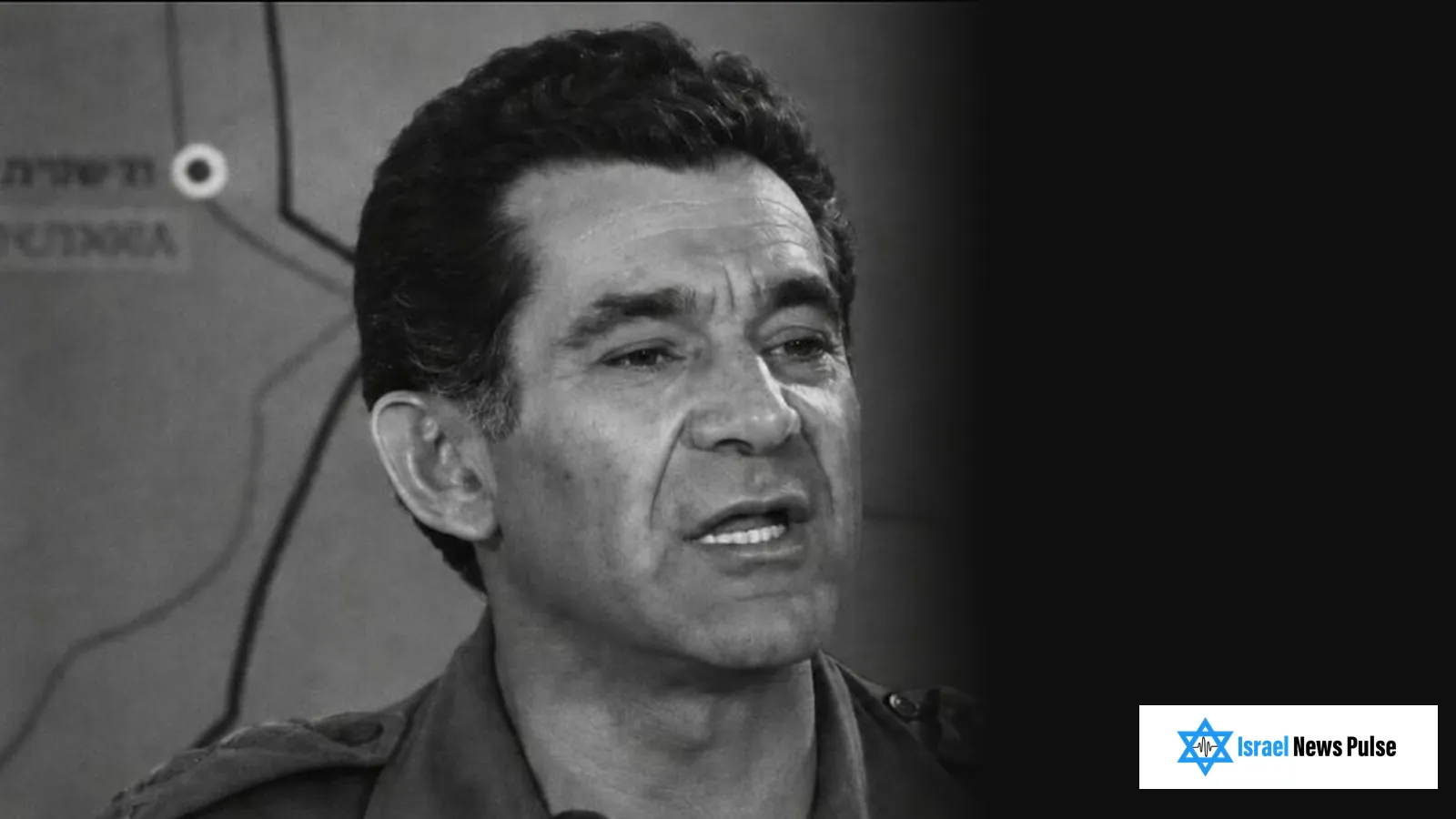
David "Dado" Elazar's answer in 1973 was blunt. Its relevance is not an argument for louder threats, but for an Israel that understands its enemies and is prepared to defeat them.
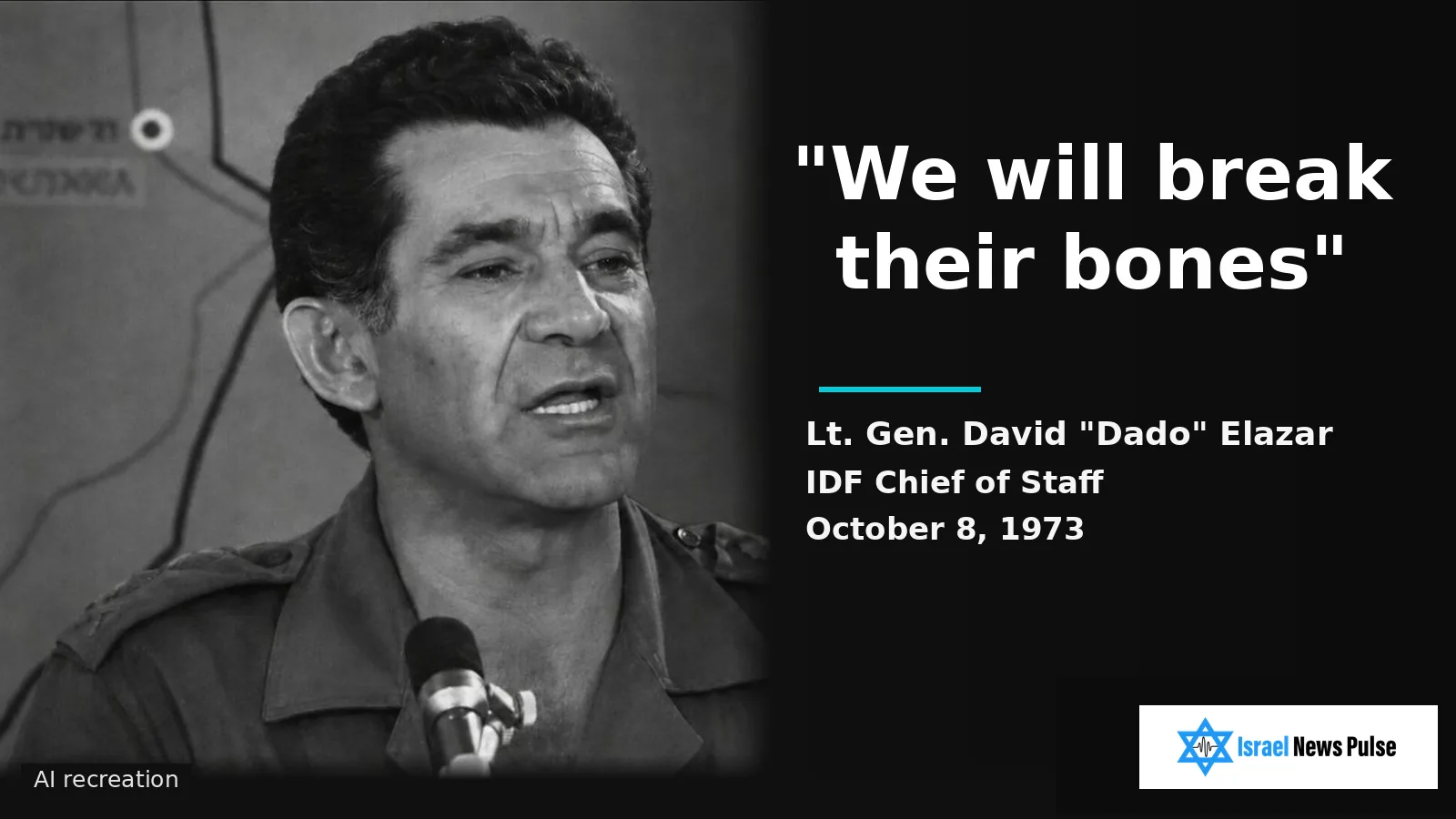
At a press conference on October 8, 1973, journalist Dan Shilon asked Lt. Gen. David "Dado" Elazar, the IDF chief of staff, whether he expected a short war or a long one. It was the third day of the Yom Kippur War.
Elazar replied in Hebrew:
"I can predict only one thing right now: we will keep attacking, we will keep hitting them, and we will break their bones."
There was a time when Israeli generals spoke this way.
What was right was right, and what was so was so. An enemy attacking Israel was an enemy to be defeated. The army's purpose did not need to be buried beneath language that made the task sound less uncomfortable.
That directness is worth remembering.
A Promise, Not a Timetable
Shilon asked about duration. Elazar answered with intent.
There was an important qualification. Hanoch Bartov's account of the exchange records that Elazar declined to commit to how long the fighting would take. He promised continued attacks, not a quick or painless conclusion.
That distinction matters. A commander cannot honestly guarantee the date on which a war will end. He can make clear what his army intends to do.
Nor was this a moment of effortless Israeli superiority. Israel had been caught by surprise, and its counterattack in Sinai on October 8 failed. The confidence of the statement should not obscure the severity of the situation in which it was delivered.
Remembering Dado does not require pretending that strong words prevent mistakes. They do not. Intelligence, preparation, judgment and execution must give those words meaning.
But an army also needs an unmistakable purpose. In that answer, there was no uncertainty about his determination to keep fighting.
This Is Not Disney World
Let us not forget where Israel lives.
This is the Middle East. It is not Europe. And it is certainly not America.
Israel can value its Western alliances, share democratic aspirations and listen carefully to its friends without assuming that someone else's expectations provide an adequate defense plan.
Its security policy cannot be written as though the country lives inside Disney World or Six Flags.
Israeli families deserve ordinary lives: school mornings, work, holidays, arguments over dinner and plans that do not depend on the distance to a shelter. Wanting that life is natural. Assuming that Israel's enemies want to let it happen is a different proposition.
The responsibility of leadership is to protect that ordinary life against those willing to destroy it. That requires looking at threats without first softening them into something easier to discuss.
Foreign advice may be worth hearing. It cannot replace Israel's obligation to judge the danger for itself.
The Threats Have a Record
The names are familiar. Their conduct should be equally familiar.
In 2016, a United Nations commission concluded that ISIS was committing genocide against the Yazidis. This was not an argument over diplomatic language. It was an effort to destroy a community.
On October 7, 2023, Hamas and other Palestinian terrorist groups deliberately attacked civilians and took hostages. A UN commission subsequently documented those acts among its findings of war crimes. The essential facts do not become less important because another round of political debate has begun.
Iran's involvement has also extended far beyond speeches. The US National Counterterrorism Center has documented the Revolutionary Guards' provision of advanced weapons to Hezbollah, including long range rockets, cruise missiles and drones.
These are different organizations and structures, with different calculations. Understanding those differences is part of taking them seriously. So is distinguishing them from the civilians who live under their rule or alongside them.
But precision must not become an excuse for evasion. A threat does not cease to be a threat because its history is complicated.
Diplomacy should be judged by what it achieves. Restraint should be judged by whether it makes people safer. Neither should require Israel to pretend that hostile intentions disappear when described in more reassuring terms.
And Israel
The point of remembering Elazar's words is not to turn every military briefing into a competition in threats.
It is to recover the clarity behind them: when Israel is attacked, its leaders must be prepared to defeat the forces attacking it. They should be able to say so plainly, define an achievable objective and accept responsibility for the decisions required to reach it.
A fierce quotation is no substitute for a functioning army. Neither is an elegant explanation for why a threat was misunderstood.
Israel should pursue opportunities for peace without apologizing for the strength needed to protect its people. It should listen to criticism without confusing approval with security. Above all, it should resist the temptation to assess its enemies according to what it wishes they believed.
Dado's words belong to a particular war, against particular armies. The responsibility they expressed is not confined to 1973.
Let us not forget. This is the region of ISIS, Hamas, Hezbollah and the ayatollahs.
And Israel.